How To Govern
A miscellany from Rokos to Plato to Keynes
On 31st March 2026, the University of Cambridge announced the establishment of a new constituent of the university, the Rokos School of Government. The ‘Rokos’ name was justified by an exceedingly large donation to found the school, a donation made by Chris Rokos, a hedge fund manager. The school is “to equip future leaders to navigate increasingly complex domestic and global political environments in a challenging and rapidly changing world”. It will have the advantage of direct connection with the university’s “recognised expertise in technology and the sciences, together with the social sciences, arts and humanities”.
On hearing of the announcement, many were highly pleased. That could be for a variety of reasons from increased prestige for the university, more employment opportunities and, dare I say, international conference trips — and it is possible that many actively endorse the project’s intended value, namely for future governments and governing. Indeed, in view of the current democratic governments of the United States and of Israel — with their disregard for international law and Palestinian, Lebanese and Iranian civilian life — many would agree on the need for certain ethical standards to be encouraged as essential to good government.
An immediate retort to the idea of encouraging ethical standards is that the current president of the United States would have no interest in them. His policies, within and without the US, are deemed ‘transactional’, a euphemism for ‘without regard to morality’. That lack of regard for morality, international law and certain civilian lives, seems also to be a mark of the current Israeli leadership as it is for Putin’s Russia and the Islamic Republic of Iran.

Putting to one side the above scepticism of leaders paying attention to any urges of morality from a school of government, some remain sceptical of the very idea of the Rokos School of Government (hereafter, abbreviated to ‘Rokos’). By ‘some’ I mean at least one of my philosophical acquaintances, but I am certain that that condemnation is far from unique.
Whatever could give rise to the scepticism, even condemnation, of a school of government? The answer offered is that such a school would be presupposing that governing is a matter of acquiring a skill, and becoming expert in its application to governing. Policy making and good political leadership could be seen at heart as a quantitative task, perhaps relying on scientific procedures to be followed, perhaps with the overall aim as that of increasing Gross Domestic Product. The presupposition of governing as a skill has been grounded (maybe misleadingly) in Plato’s Republic where he likened governing to the captaining of a ship.
Navigating a ship, as captain (sometimes with a pilot), requires expertise; the captain would be wise to follow his experience and knowledge rather than requiring the passengers to vote on navigational choices. Passengers would, no doubt, express conflicting views. Not being experts, they would have no idea of how to read the charts and analyse data and hence how best to avoid the rocks and storms and other hazards. How much more complicated and important is that of steering the Ship of State through choppy waters — or even through waters becalmed.
If steering a ship is indeed the model, then the model delivers dismissal of democracy, a dismissal summed as: ‘so much for democracy’. Just as it would be irrational to rely on the passengers for getting the ship safely to its destination, so it must be irrational to let the steering of the Ship of State be determined by democratic votings.
Critics of Rokos could see such a school as committed to the two follies mentioned above. To reiterate: one folly is the belief that governing is a skill requiring experts; the other folly is a dismissal of the importance of democracy. Maybe democratic procedures would in practice have to be supported by a government in power, but suitable voting arrangements and governmental structures can be set to avoid much by way of interference from ‘the masses’. ‘Leave government to the experts’ is a mantra drawn from Plato.
A third folly — one that intermeshes with the first two — is said to be government’s reliance on ‘experts’ from outside, be they scientists, economists or even management consultants. For example, according to some critics of government, such experts with governments kowtowing to them deserve the blame for dealing with the Covid pandemic by means of lockdowns. Mind you, quite how that blame is justified is pretty unclear; and that unclarity may help us later to see an unclarity in the objections to Rokos. Here is the unclarity.
Certain critics at the time appeared just to ‘know’ that the experts were wrong in recommending lockdowns. The critics, it seemed, were displaying a fault that they loudly condemned of others. The critics' so-called knowledge appeared to rest on the dogma that individuals' freedoms trump everything else. That dogma was often opposed to the dogma that they saw in others, for example, that governments should intervene in people’s lives when likely to be to the people’s benefit. That sort of intervention is often disparagingly called ‘nannying’.
Curiously, those critics who condemn governments' nannying of people (the aim being to benefit lives) are highly relaxed about, and even praise, corporations who do their own version of nannying through advertising and other techniques where the aim is corporate profit rather than, for example, consumers' improved health. In both cases there are intrusions on people’s lives, yet the mantra seems to be: governmental intrusion, bad; corporate intrusion, good.
During the pandemic, some critics of the reliance on experts that led to the lockdown policies — policies that rested on scientific ‘advice’ — produced their own recommended alternative policies based on other expert evidence. Presumably the critics were blind to the paradox of objecting to lockdown policies because recommended by experts, yet themselves relying on experts. Of course, there ought not to have to been an objection to experts, but a reasonable concern for how to reach decisions when experts disagree. There may well be no simple rule to follow, such as counting numbers on each side, but a flurry of factors to try to take into account and over which to reach good judgement.
With regard to the forthcoming Rokos, I have no idea how it will be run and how it will integrate technology, science, theory and the humanities et al. Will it seek to provide a consensus on how to handle the then governmental problems? That government decision-making should be well-informed regarding scientific discoveries, predictions and innovations — and the advantages and dangers of developments in artificial intelligence, financial instruments and social relations — strikes me as obviously true. ‘Being informed by’ does not mean that there exists a simple rule or technique that must then be followed, given the information. I doubt if Plato would have thought so.
Critics of Rokos could be conflating two distinct areas that will probably be developed within the school. There is the area of public administration where the need is, for example, to educate individuals, aiming for the civil service; they would need the skills and knowledge to grasp complex rules, regulations and law; and also the ability to apply appropriately in different circumstances, identifying possible improvements, nuances and flexibility. Distinct from that — and this may be the particular value of Rokos — is the nurturing of individuals' talents for initiating policy and leading governments, sensitive to the politics and to the public’s anxieties and conflicts, having in mind the interests of the country and its diverse and changing populations.
The latter concern — nurturing leaders — can be criticised as aiming to create an elite. If that is a justified criticism, then it could surely be applied to having educational means whereby some individuals become judges, some medical doctors and even some becoming philosophers. We could also consider how these days an elite has been formed, with no ‘democratic’ debate, of highly powerful global corporations that determine much of our choices and how we live — but that is for a different paper.
Courtesy of Andreas Matthias, I am reminded of an elite that came about via the recruitment examinations for the British civil service, for example, for the East India Company, during the nineteenth-century days of the British Empire. In recent decades, we could quip that the University of Oxford’s PPE degree course and similar have been training grounds for British prime ministers and senior cabinet ministers — with not exactly happy results. That unhappiness has not been caused by the leaders governing according to a technique or following certain rules of government; for some, the only rules they probably knew from their academic studies were the rules for declining nouns in the third declension of ancient Greek and conjugating verbs in the subjunctive in Latin’s fourth conjugation.
Putting the past back in the past and placing to one side the speculations about how Rokos will be run, here and now I merely seek to bring some cool and simple reflection on the somewhat brusque criticisms given above of the aforementioned school of government.
Good and bad government
Just because there are no experts in a certain field and no techniques that must be followed, it does not follow that there cannot be, or ought not to be, schools covering those fields. That again strikes me as obvious. We cannot be taught to be good poets, philosophers or artists solely by learning certain techniques, but techniques can help and we certainly can be made aware of good and bad instances of poetry, philosophical reasoning and painting. That can be useful for reflecting on our own approaches, not least if we are then eager to react against traditions or merely to develop anew. Such comments apply to governments and governing. Art schools do not exist to teach ‘painting by numbers’. A school of government need not encourage ‘governing by algorithms’.
Manifestly, there is a distinction between good and bad government. That distinction applies both to the aims of government and to the means to achieve those aims. That there is a distinction can easily be shown by citing some instances of bad governing. None of that implies that there must therefore be only one good way of governing. It does show how there are many bad ways.
A government with the sole aim of financially benefiting the ruling class at the cost of the living standards of its people is bad government. A government with the good aim of improving the welfare of its population is none the less a bad government if the means it employs are hopelessly ineffective. For example, if seeking to improve the overall health of its population, it would be crazy to ignore the evidence provided by independent medical researchers, by epidemiologists and cancer specialists, instead preferring to follow the advice of corporations with vested interests in increasing consumption of their unhealthy products. Witness the example of smoking some decades ago in the UK. Witness today the reluctance of certain food manufacturers to lower sugar and salt levels; witness also gambling organisations' resistance to regulating the gambling.
Those who forever criticize governments for relying on ‘experts’ for evidence and resultant forecasts should do well to reflect that there are good criteria for assessing evidence — collection of data; randomised trials; genetic analyses — and there are bad, for example, by looking at the entrails of sacrificed animals or relying on astrologists. In the UK, during the Covid pandemic, apparently the government deemed it wise to order personal protective equipment from certain companies with no experience in such areas, chosen only because recommended by governmental friends — the results being inadequate equipment, wasteful expense and a subsequent futile chase to recover funds.
My way is the right way
Plato gets it in the neck for seeking to work out what is the best form of government and, relatedly, structure of society. Now, it is perfectly reasonable to question whether there is just one right way of governing, be the focus on the aim or on the means to achieve that aim. Oddly, certain critics of Plato’s ‘one way’ seem blind to how they too are guilty (if guilt it be) of insisting on the existence of only one right way of governing. I alluded to that earlier. I have in mind those critics who sing the mantra of ‘the glory of freedom’, of the right way of governing being the one in which the government does not interfere in people’s lives.
A caveat is to come, but before the caveat, yes, it is logically possible that giving top priority to individuals' freedom might be a good way for a state to be governed, but that does not show that other ways cannot also be good or even better. After all, some may reasonably argue that a good government should see its top priority as that of providing for the basic needs of all its people — and that could well impinge on people’s freedoms. Or attention could be given to the adverse effects on a society when there are gross wealth inequalities.
I mentioned a caveat. Although I have frequently heard people going overboard in proclaiming the virtue of individual freedom, once challenged they have reluctantly to add their own caveats about individuals being free to run their lives as they want ‘as far as possible’ or ‘without restricting the freedoms of others’. Such caveats are well expressed, without reluctance, by influential liberal thinkers such as John Stuart Mill in the nineteenth century writing on liberty and the sovereignty of the individual.
Once we have such caveats in play, then it is surely right to acknowledge that there is considerable scope for debate with regard to the restrictions on some people to enable the development of individual freedoms for others. I here quote the much quoted mantra, “Freedom for the pike is death for the minnows.” By the way, although the quotation is usually attributed to Isaiah Berlin (from his 1958 paper ‘Two Concepts of Liberty’), in fact it goes back to R. H. Tawney’s Equality (1938) and probably earlier.
Lovers of individuals' freedoms seem to find it very easy to overlook the fact that the freedom for people to acquire more and more leads to greater and greater restrictions on the freedom of others. For instance, the more land owned as private property, the greater the restrictions on non-landowners freedom to roam.
Further, we may reasonably question whether it is right or intuitively obvious that the ‘individual’ should be seen as paramount, the unit to be deployed when assessing policies rather than, say, the family or the profession or community. There are more basic questions here about what constitutes one’s ‘self’ for the questions lead into how to understand the nature of autonomy and, for example, the right to receive assisted dying or to be punished for crimes committed decades earlier.
Good government would need to face such complexities as the above and how it could be possible to reconcile the pike and minnows. That is where other values enter, such as justice, equity, compassion and so forth. Thus it is that we have on our hands incommensurable values — and judgement is required regarding how to weigh them against each other. The weighing is a mystery, a conjuring trick, if the values really are incommensurable. Now, Plato would insist on the importance of good judgement, but would seem to challenge the incommensurability when he is inclined to thinking of the virtues as a unity.
There are many more questions regarding how to govern — from practical ones over how to formulate and implement policies to how closely to adhere to commonly recognised moral values and which grey areas may be justified. Some may draw on Machiavelli who promoted the idea that political rulers need to learn how ‘not to be good’, how to deceive, manipulate, yes, even to engage in war crimes as today they would be deemed. None of those points imply that there is a technique to be followed. They all would seem to be good fare for discussion at a school of government and for an understanding that in some cases there are no clear answers.
Democracy?
As said, Plato gets it in the neck for his rejection of democracy. He opposed the democracy of his day where certain classes, with their own interests, would be voting on which policies for the city state to pursue. He was also opposed to ochlocracy (more akin to today’s democracy) or mob rule, with the mob being led by demagogues — rabble-rousers — as Plato would see them. I resist mentioning Mr Trump and hence, paradoxically, mention him.
Whatever we may think about Plato’s objections to democracy, it is astonishing that democracy receives splendid accolades given the unclarity in the very notion. Mind you, maybe it is not astonishing for we, mere humans, have a tendency to prefer simple ideas or mantras without doing the hard work of digging into them and realizing that they are not at all trouble-free.
With simplicity to the fore, one simple way of showing that democracy is not as great as is made out is the following. Democratic countries, accepted as such, have different voting systems, such as First Pass The Post, Single Transferable Vote, Additional Member System. They all bask in the glow of the ‘democratic’ praise.
In a given election, if one system is used, the outcome could be a government in support of a war, but had a different system been used, the outcome would be one opposed to the war. Or, in one system, the outcome would be minimal state intervention; in the other, just the opposite. Is it rational to heap praise on the idea of democracy, when it allows such radically different outcomes despite voters having voted in the same way?
My rhetorical question is to challenge the casual support for democracy when it can justify such radically different outcomes, despite people’s voting being no different. If the people in two different countries vote the same way, with the same choices, but the voting systems are different, then the governments that get elected can be diametrically opposed. One may as well spin a coin — Plato would not like that — and such spinning hardly sounds like a procedure for good government. Mind you, many people seem to be lulled into thinking democracy is acceptable (I wonder how that comes about), despite the tenuous link between the voting patterns and the eventual government.
Further questions should, of course, be raised about the democratic procedures when governments manipulate institutions, constituency boundaries or use wealthy backers, to increase the likelihood of re-election.
There are many more perplexities over democracy. A basic distinction could be drawn regarding its application. Returning to the ship metaphor, while the passengers ought not to decide how to navigate the ship, surely they should have a voice in choosing their destination. Maybe democratic voting deserves a place in determining the type of state sought — whether, for instance, with conservative values or not — but not in determining the best means to achieve the chosen end. Even with regard to ends, though, restrictions on democratic voting are required. Let us remember that for the institution of a democracy to have any chance of working decently, there must be areas not open to democratic decision-making. And, if we are to avoid circular justifications, democracy cannot be justified by democratic voting.
A democracy, for example, ought not to discriminate on irrelevant grounds with regard to who has the right to vote whatever the majority vote might be — or to institute slavery of a minority, even if the majority voted for such. For another example, consider a recent law passed in Israel by the democratically elected government (though how it represents the people is open to question). There, for the same crime, if the criminals are Palestinian then the death penalty can be applied, but not if they are Israeli.
Muddling
I have often written of ‘muddling through’, but maybe the ‘through’ is too optimistic. Perhaps sometimes we just end up in the muddle. Here I have presented the muddle of a few puzzles and debates to be addressed when thinking about how a government should work and what constitues good government. It is, then, perfectly reasonable to institute a school of government, Rokos, if it addresses such problems — and addresses many more worries, for example, the extent of freedom of information, the use of artificial intelligence and how personal interests may be allowed to relate to policy development — and, indeed, whether philanthropy, rather than government policy, should determine which schools develop in higher education.
Rokos, the School of Government, is being founded in a university that has a distinguished history from the ground-breaking scientific discoveries at the Cavendish Laboratory to the important influence of the economist John Maynard Keynes to the computer pioneer Alan Turing to philosophers, Bertrand Russell, Frank Ramsey and Ludwig Wittgenstein to Crick and Watson’s discovery of DNA’s struture — I mention a few. The University continues explorations in those fields and Cambridge’s Rokos, no doubt, will ensure that participants are kept abreast of developments in such areas in the quest for good government.
It is to be hoped, then, that Rokos will ensure that participants achieve an extended awareness of the many scientific, medical and social changes that can affect good government and the generation of policies. It is to be hoped that Rokos will encourage reflection on how there may well be different forms of good government instead of going for the silver tongues of those who insist on seemimgly simple answers, for example, by way of the mantra that good government is bound to be one that does not intrude into people’s lives.
Allow me, please, to add a further ‘it is hoped that’, namely that students are urged to engage with Plato and grasp that good captaining of a ship can at times require imagination and judgement when the unexpected arises. Plato’s rulers are to be wise and virtuous and, as such, will be prepared to change their minds when the circumstances change. With that to the fore, I should reach a conclusion by again mentioning Keynes of King’s College, Cambridge.
Keynes, when criticized for his changes of mind, allegedly would quip, “When the facts change, I change my mind. What do you do, sir?”. I add to the quip: even when the facts do not change, we may come to see matters in a different light — and hence, rightly, change our mind. That is what we should do if ‘wise and virtuous’ and, I suspect, Plato could agree.
◊ ◊ ◊
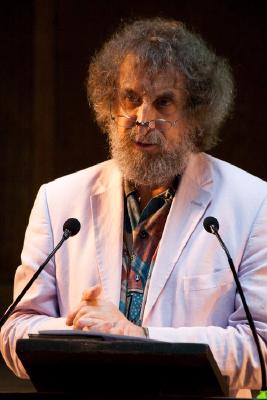
Peter Cave is a popular philosophy writer and speaker. He read philosophy at University College London and King’s College Cambridge. Peter is a Fellow of the Royal Society of Arts, Honorary Member of Population Matters, former member of the Council of the Royal Institute of Philosophy and Chair of Humanist Philosophers - and is a Patron of Humanists UK. He has scripted and presented BBC radio philosophy programmes and often takes part in public debates on religion, ethics and socio-political matters. His philosophy books include This Sentence Is False: An Introduction to Philosophical Paradoxes (2009), and three Beginner’s Guides: to Humanism, Philosophy and Ethics. More recent works are The Big Think Book: Discover Philosophy Through 99 Perplexing Problems (2015), The Myths We Live By: A Contrarian’s Guide to Democracy, Free Speech and Other Liberal Fictions (2019), and How to Think Like a Philosopher (2023).
Find out more about Peter Cave at: www.philosophycave.com.
Peter Cave on Daily Philosophy: