2+2=4
But why?
Why does 2+2=4…? The answer may not be as simple as one thinks. One should add that 2+2=4 is usually thought of as true, indeed the very paradigm of a truth, a certain necessary truth.1 By ‘certain’ is meant that one can be sure that it is true. By ‘necessary’ is meant that the truth could not be otherwise. The matter of certainty is an epistemological one: how we know that 2+2=4. The matter of truth and of necessary truth is a metaphysical one: what makes it the case that 2+2=4. Both these aspects will form part of the discussion below, but the chief concern will be the metaphysical question of why 2+2=4. However, in the final section both matters are brought together, certainty and necessary truth.
Here are some answers. One cannot pretend to cover all the complications by any means.
1. Obvious
It is obvious. Anyone can just see that it must be so.
The problem with this is that obviousness is just a psychological state and may say nothing about the truth of something or whether something is the case. Lots of things that appeared obvious once have turned out to be false and not the case. Look out of the window, and what do you see? A flat if bumpy earth. It certainly does not look round. Obviously flat. Clearly also it is the case that it is a fundamental truth and law of nature that in order for things to keep moving they have to have a force applied to them. It turns out of course that just the reverse is the truth: things are stationary or keep moving in a straight line unless a force is applied to them. Surely it is obvious that the sun rises, moves through the sky and sets? No, it is us on the earth that are doing the moving and giving that same appearance. Surely it is obvious that heavy objects as a general law will fall faster than lighter ones. But it was shown that when one drops a feather and a hammer on the moon they fall at the same rate regardless of their mass.2 And so on, people can very easily think of things that are obvious that are in fact false. Moreover, we want more than obviousness, we may want to say that 2+2=4 is a necessary truth, and there are countless putative necessary truths that are not obvious. (6143 ÷ 321.97) x 8.43=160.83948 is a necessary truth just as 2+2=4 is, but it is far from obvious, perhaps not obvious at all for anyone, excepting someone with an extraordinary calculating mind.

But there is worse to come for the response of 2+2=4 because it is obvious. Being obvious is a weak response to why something is certain, as has just been shown. But to say something is obvious does not begin to address at all the matter of why 2+2=4 is true, let alone its being a necessary truth.
2. Facts
Facts in the world. 2+2=4 is true because that’s what happens in the world.
You take two objects and two objects and you then have four objects. Count them. 1, 2, and 1, 2, and then 2 and 2, and you have 4 of whatever it is. Two apples and add two more apples, and how many apples do you have? Four apples.
There are a few problems here.
The first is that we ideally wanted 2+2=4 to be a necessary truth. But if its truth depends on how objects behave or combine in the world, then it is a merely a contingent truth, one that might be false if the world were different. This would make arithmetic truths a posteriori, that is, ones that may be known to be true only by referring to facts about the world. The truth 2+2=4 would be like the true law about how objects fall under gravity in a vacuum that is that near the surface of the Earth, an object in free fall in a vacuum will accelerate at approximately 9.8 m/s² independent of its mass. But this could have been different. Gravity could have been a weaker or stronger force in the universe, making the truth a contingent one, not a necessary one.
The second issue with 2+2=4 being true because of how the world is is that it would be the kind of supposed truth we could never know the truth of with either certainty or necessity, for we cannot test every two objects and two objects and see if they make four for every combination of objects in the universe. Moreover, it would only take one instance of its not adding up to four for it to be the case that 2+2=4 is false. At best we might say in that case that 2+2=4 is highly probably true for the objects in the universe we have come across so far. Do we really want 2+2=4 to be only probably true? Just as it is only probably true, albeit highly, that there are no elephants living at the North Pole. For 2+2=4 to have its usual sense, its certainty, its necessity, its being more than even a universal truth (a universal truth is one that so happens to apply to everything of a certain description, but, unlike a necessary one, need not have done so if things had been different), we do not want it to be about facts about the world.
The third matter is that of its being the case that if you add two objects and two objects in the world you get four objects is simply false. Add two drops of water to two drops of water and how many drops of water do you have? The answer is one drop of water. Put two female rabbits and two male rabbits in a cage and how many rabbits do you have? After not long you will have more than four rabbits. And if by this you bring time conditions into the consideration of the facts, whatever else 2+2=4 might be, it is not then going to be a necessary truth. If you add two glasses of water at 30C to another two glasses of water at 30C, do you have a glass of water at 120C? No, you do not. You have a glass of water at 30C at most. One might try to prescribe the conditions of addable objecthood, so to speak. So apples are alright, at least for a while, because they stay distinct. But then one is merely stipulating the objects to which 2+2=4 can be applied and to which it cannot. But on what grounds? If one says that it is because when you add two of them to two others of them one gets four of them, the reasoning becomes circular: 2+2=4 because if you add two objects and two objects you get four, and the objects to which 2+2=4 applies are the ones which when you add two and two of them you get four of them.3
Your ad-blocker ate the form? Just click here to subscribe!
3. Convention and Formalism
It is a convention. It is just formal.
These are not the same, but there is some overlap. In both cases 2+2=4 is something we agree to be the case. In the case of conventionalism 2+2=4 is true or false because of the meanings we give to terms. This would make arithmetical truths what philosophers call ‘analytic truths’, that is, we can know they are true or false just by understanding the meaning of the terms that make them up, just as we can know as true that ‘All bachelors are unmarried men’, given that being a bachelor means being an unmarried man. If the meanings of the terms changed then so would the truth or falsity of the statements involving them. In the case of formalism, although it is also a matter of our agreeing on the rules for the terms, this does not make 2+2=4 true or false, any more so than the agreed rules of the game of chess that bishops move diagonally and that rooks linearly. If you want to play chess, that is the rule, and if you want to do arithmetic, that is the rule. It is just a matter of how ‘2’ and ‘+’ and ‘=’ are defined. But these rules could be changed.
The trouble with formalism, as has been said, is that the whole idea of truth in the sense usually ascribed to arithmetical statements drops out of the picture. However, formalism embraces this. The moves in chess refer to nothing beyond the game of chess. It is true that they are the rules of chess, but the rules themselves are not in any further sense true (or false). They are merely just what they are. We might have it, agree, that rooks move diagonally and bishops move linearly. One might say in that case that it would no longer be chess one is playing but chass, or something like that. Nevertheless, one can change the rule for these pieces. But the case of 2+2=4 we surely construe as true in itself, and necessarily so. It is not just a matter of what we have to do if we want to play the game of arithmetic.
The problem with conventionalism is that if 2+2=4 is a convention, then it can be changed. Do we really want to say that the rule that 2+2= is such that one may not be correct, make a mistake, in writing 4, because the rule may be changed? That we could just by mere agreement make it true that 2+2=5? But if something is true and necessarily true, it cannot be changed by mere convention, mere agreement, no matter how universal the agreed nature of the change.4
The third matter rather looks at the matter of 2+2=4 from the other direction in its relation to the world. Whereas before we could not see how contingent facts about the world could do the job of securing the necessary truth of 2+2=4, now it is hard to see how in the case of conventionalism or formalism 2+2=4 has any relation to the world at all, that it says anything about the world. In the case of conventionalism this is because 2+2=4 is true just because of the agreed meanings of its terms, and so like all such analytic statements it tells us nothing about the world. The case of formalism is to admit that 2+2=4 being neither true or false, being just a matter of formal rules, says nothing about the world at all. But this is puzzling in both cases as arithmetic (more generally mathematics) is a powerful tool for telling us about the world, in particular in science. It does not seem like just a matter of changeable agreed meanings or rules which may tell us nothing anything about the facts of the world.
4. Platonism
This is the most common form of realism, though there are others. It is called Platonism because Plato believed there existed, indeed must exist, a world of immutable necessary eternal Forms beyond the world we see around us, to which objects in the world corresponded and rely on for their identity, their being what they are. Since all the chairs in the world vary from each other, for there to be things called ‘chairs’ there must be an ideal chair (chairness), the Form of the chair, which allows us to call a certain set of objects in the world ‘chairs’, without which we would just have a confusion of ungrouped particular individuals and not kinds of objects. Among the Forms are mathematical objects and truths. And these objects are what make mathematical truths such as 2+2=4 true, for 2 and 4 and + and = exist as ideal eternal objects and when combined correspond to the truth that 2+2=4 states.
All well and good. 2+2=4 corresponds in its parts and whole to the existence of eternal necessary objects – not to facts about the world and not to nothing as conventionalism would have it.
The main problem here is why would one believe in the existence of such eternal necessary objects. What evidence is there for their existence, of the existence of such a world? No-one has ever seen such a world in any usual sense of seeing. If one suggests that they must exist, otherwise we cannot explain the necessity and truth of arithmetical statements such as 2+2=4, the arguments for such objects start to look arbitrary and question begging. We are trying to explain the necessity and truth of 2+2=4, so we just posit the existence of a world in which that truth exists necessarily. But this hardly solves the problem, for it simply returns us to what it would mean for such a world of objects to exist, and in what way its objects may form into the truth such as 2+2=4 so that it is a necessary truth. In short, it just shifts the puzzle elsewhere, namely why in that world do objects form up into necessary truths rather than contingent ones. There is no point on pain of circularity in replying to this saying that they do so because they are the objects of necessary arithmetic and mathematical truths.
5. Intuitionism and psychologism
Here we shall treat these together as variations on a common idea that truths like 2+2=4 are based on our psychology, the way we think. It should be pointed out immediately that ‘intuition’ here is nothing to do with getting a feeling about something that may turn out to be true ahead of evidence from which one could have properly drawn the view that turns out to be true. For intuitionism, mathematical concepts (such as numbers and addition and equality) are not derived from the world but are necessary preconditions – which are referred to as a priori – for our having experience of objects in the world at all. For psychologism, mathematical concepts (again, such as numbers and addition and equality) reflect the contingent facts about how we think.
The problem with both of these ideas is that they fail to support the full force of 2+2=4 as a necessary truth. This is easy to see in the case of psychologism, where such a truth is admitted to depend on the way we contingently happen to think. The issue is harder to see in the case of intuitionism but might be put as this: it is not clear whether the possession of mathematical concepts is necessary for merely for us to experience the objects of the world, or whether they are necessary for any rational creature to experience objects in the world. If not the latter, then again the contingency of the condition of mathematical concepts and truths being required merely for us undermines the absolute necessity of mathematical concepts and truths.5

Seemingly intractable paradoxes involved in speaking of the ineffable are based on a mistake.
6. Logicism
This formidable-sounding view is perhaps both the hardest and the easiest to deal with. The basic idea is that arithmetic and mathematics are really just an extension of deductive logic. And since logic is in good order, one may suppose, and has no problem supporting certain necessary truths, then a mathematics based on it should be the same. The way this was approached6 is through the notion of axioms and sets of sets. The axioms are assumed fundamental truths of logic. A set is simply a collection of well-defined distinct objects, which are called its members or elements. Like people gathered in a room or apples in a bag. Numbers are then defined by a one-to-one correspondence of the members in sets. So people in a set and apples in a set have the same number, say 2 in each set, when there is one person for one apple and another person for the other apples, and none left over. This makes numbers an abstraction – abstracting means disregarding certain features to find a commonality – so it does not matter that it is two people and two apples, or two anything else – what is in common and abstracted here are two of whatever it is, their twoness.
It is too complicated to go into the problems of this view of arithmetic and mathematics. Essentially there was found to be an irresolvable, supposedly, paradox or contradiction in the very idea of a set7 which undermined the certainty and necessity which logic was meant to bestow on mathematics. Also one may wonder, since the members of a set having a one-to-one correspondence already involves the concept of the number one, how it can ground the notion of numbers as such.8
It is in addition an odd situation where the proof, in this case that of the truth that 1+1=2 (but the same would apply to 2+2=4) in at least one famous logicist instance, makes its truth less apparent and more complex (dependent on a huge logical apparatus), than the truth itself.9
7. Contradiction
But here is another view. It brings together the epistemic (certainty) and metaphysical (necessary truth) referred to at the outset. And this refers to the previously mentioned easier form of what might be regarded as logicism in a broad sense and applies at least to the certainty and necessary truth of 2+2=4, which was our original question.
It calls upon the most basic concept in logic. Why does 2+2=4? This answer is the one preferred here.10 This is to say, that 2+2=4 is certain, necessary, and can be known a priori (that is without referring to facts about the world) because its denial would be a logical contradiction, as to assert that 2+2≠4, would be the same as asserting that 1+1+1+1≠1+1+1+1. When you put the equivalent of 2+2=4 as 1+1+1+1=1+1+1+1, you can plainly see that what is on either side of the equal sign is the same, is indeed equal. One is asserting the same thing both sides. Therefore, to assert one thing on one side and assert that it is not the same as the other side is a contradiction, asserting something and denying it at the same time.
What is wrong with contradictions, one may ask? Why not allow them?11 It is one of those basic rules of logic that (p & ∼p) cannot be allowed, so that ∼(p & ∼p) is always and necessarily true. Here ‘p’ is a variable standing for any proposition whatsoever, and so ∼(p & ∼p) applies to any proposition we may substitute for p. The grounds for this it may be said is that allowing contradictions would undermine the very possibility of all discourse, for to allow them would mean that there would be no distinction between assertion and denial. How could one know what someone is saying if in all cases anything they say could mean one thing or its exact opposite? One would not know if when someone said ‘The cat is sitting on the mat’, that they are not saying ‘The cat is not sitting on the mat’ – in short one could not tell, without holding onto excluding contradiction from discourse, what anyone was saying, what they meant. Utterances would be meaningless.
If logical contradictions must not be allowed in all discourse such that when they appear they require resolution, and to deny that 2+2=4 is a logical contradiction, then that too must be denied, for as in discourse generally, if to assert that 2+2≠4 is permitted, then all of arithmetic and by extension mathematics would be impossible and meaningless. 2+2=4 is certainly and necessarily true because 1+1+1+1=1+1+1+1, any denial of which would be a logical contradiction.
◊ ◊ ◊
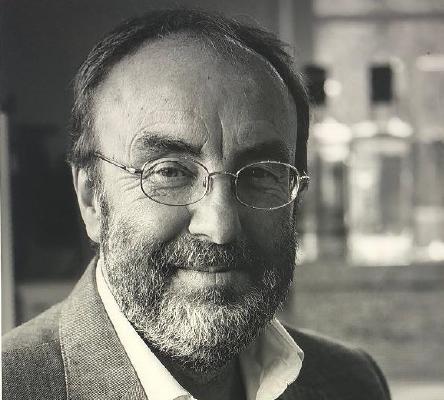
Dr John Shand is a Visiting Fellow in Philosophy at the Open University. He studied philosophy at the University of Manchester and King’s College, University of Cambridge. He has taught at Cambridge, Manchester and the Open University. The author of numerous articles, reviews, and edited books, his own books include, Arguing Well (London: Routledge, 2000) and Philosophy and Philosophers: An Introduction to Western Philosophy, 2nd edition (London: Routledge, 2014).
Contact information:
- Dr John Shand, The Open University, Walton Hall, Milton Keynes, Buckinghamshire, MK7 6AA, United Kingdom.
- https://open.academia.edu/JohnShand
- http://fass.open.ac.uk/philosophy/people
John Shand on Daily Philosophy:
Notes
-
This is why in George Orwell, Nineteen Eighty-Four (also published as 1984) Orwell uses it as the last truth destroyed by the State, something that seems impossible. But eventually they make the protagonist Winston Smith believe it false and that 2+2=5 is true. In that case, Orwell implies, one can be made to believe any truth false and anything false true. If we cannot know 2+2=4 is true we cannot know anything. Of course, it is a moot point whether the all-powerful State can make 2+2 not equal 4, as opposed to one merely being made to believe 2+2≠4. But the effect on not knowing what is true, that is doubting what is true and what is false, is the same. The same idea turns up in in Descartes, Meditations, where it may be taken as uncertain whether the Evil Demon, or indeed God, can make 2+2=5 – but nevertheless either can certainly make us believe 2+2=5, and that is all that is required for us to doubt if we know the truths of arithmetic. ↩︎
-
So that in 1971 astronaut David Scott cheerfully declared ‘Galileo was right’. ↩︎
-
John Stuart Mill advocates a factual empiricist and psychologist view of arithmetic. This position is attacked by Gottlob Frege in The Foundations of Arithmetic (1884), arguing that instead that numbers are objective, abstract logical entities. ↩︎
-
Here we are back with Orwell. ↩︎
-
For the philosophical background of this one would have to look at Immanuel Kant, Critique of Pure Reason [1781] Trans Norman Kemp Smith (London: Macmillan, 1976). ↩︎
-
Here one looks to Giuseppe Peano, Gotlieb Frege, Bertrand Russell, and Alfred North Whitehead. ↩︎
-
Russell’s Paradox, ↩︎
-
For more on the difficulty of deriving mathematics from a set of axioms, one should look at the work of Kurt Gödel (1906-1978). The Incompleteness Theorem. The first part of this showed that mathematics, while it must be logically consistent, any mathematics richer than arithmetic would always be incomplete, that is, it would always contain truth theorems that could not be proved using only the axioms within that mathematical system. The second part of the theorem showed that such a mathematical system could not prove its own consistency. See Ernest Nagel and James R. Newmann, Gödel’s Proof (London: Routledge & Kegan Paul, 1976). ↩︎
-
Bertrand Russell and A. N. Whitehead, Principia Mathematica (Cambridge: Cambridge University Press, 1910), *54.43. ↩︎
-
It may be claimed that this was the view of Gottfried Wilhelm Leibniz (1646-1716), although he extended it to talk about possible worlds, in which all necessary truths, such as 2+2=4, are true. Contingent truths, such as dogs have four legs, are true only in some possible worlds, as it is not impossible for there to be a possible world where dogs have a different number of legs. ↩︎
-
That they may be allowed in a limited sense, with a bounded discourse if not globally, is argued for by Graham Priest, for example see his 2015. ‘Speaking of the Ineffable, East and West’, 2015, EuJAP, Vol.11, No.2. But this cannot be gone into here. I say a bit more on this in my paper, John Shand, ‘Ineffable Understanding’, Daily Philosophy, July 2023. ↩︎