Rossella Vingelli on the Limits of Life
Philosopher Interviews
Rossella Vingelli is a PhD candidate in Philosophy at the University of Liverpool, working on the philosophical conceptualisation of extraterrestrial life. She recently published the article “Astrobiology and the Limits of Life” on Daily Philosophy:
The question of life stands at the very core of astrobiology, often defined as the study of the origin, evolution, distribution, and future of life in the universe.
I think my interest in astrobiology comes from the meeting of two fields of study that are often seen as quite separate: science and philosophy. Before studying philosophy at university, I attended a scientific high school, where I developed a strong inclination towards scientific thinking and towards the way science observes, experiments, and seeks to understand the world. Later, I chose to study philosophy because I felt it would allow me to continue questioning existence in a critical way. And when I speak of existence, I simply mean everything that exists.
That has always been my understanding of philosophy: not as an abstract discipline, but as a way of understanding reality in its entirety. Over time, I realised that these two approaches were not in conflict at all, but deeply complementary. Science builds knowledge through observation, experimentation, and evidence, while philosophy reflects on the meaning of what we discover, on the limits of our knowledge, and on the role of human perception. Between these two perspectives there is another element that I consider fundamental: intuition. I think intuition often forms the bridge between philosophical reflection and the scientific method. A new question usually begins with an intuition; philosophy develops it critically, and science then attempts to test and verify it.
For me, astrobiology is precisely where these different ways of thinking come together. It is a deeply scientific discipline, but at the same time an inevitably philosophical one.
During the development of my MPhil thesis, Human and Vegetal Life – an interdisciplinary project that brought together philosophy, botany, and architecture to reflect on the climate crisis and our relationship with nature and biodiversity – I began to realise that we tend to think of life as a property of the individual organism, whereas no organism truly exists in isolation. Every form of life exists through continuous relationships with other organisms, with its environment, and with the planet itself.
It was then that I felt the need for a concept capable of describing this relational dimension of life. From that reflection, the idea of extended organicity emerged. I did not want to propose a new biological definition of life, but rather a different way of understanding it: not as a property belonging to an isolated individual, but as a dynamic process that emerges through relationships, exchanges, and continuous transformations.
This is a very important question, and it is precisely where the concept needs to be clarified.
Extended organicity does not mean that everything is alive. If it did, the concept would lose all explanatory value.
The point is not to extend life to everything, but to shift our attention from isolated organisms to the conditions that make life possible. It is not enough for something simply to be connected to something else. What matters is the emergence of processes of integration, adaptation, continuity, and co-construction with the environment.
Life, of course, still follows specific biological conditions and processes. At the same time, however, the history of evolution shows that life is remarkably creative. Faced with new environmental conditions, it can develop new strategies, new forms of organisation, and new adaptive capacities that did not previously exist. For this reason, I believe we should avoid definitions that are too rigid – not because everything should be considered alive, but because life itself may surprise us with forms of existence that we are not yet able to imagine.
In this sense, extended organicity does not erase the boundaries of life; rather, it suggests that those boundaries are more dynamic, relational, and evolutionary than we usually assume.
No, I don’t think that is the consequence of my theory. Culture, language, economies, and the internet are certainly complex and deeply relational systems, but they are expressions of life rather than life itself.
For me, relationality alone is not sufficient. Extended organicity does not claim that everything connected is alive. Rather, it suggests that life cannot be fully understood without the relationships that make it possible.
Culture, economies, and technologies can participate in these processes, profoundly influence them, and even transform them, but that does not automatically make them forms of life.
Perhaps the boundary between the living and the non-living is not as rigid as we have traditionally assumed, but that does not mean it disappears. The challenge is not to erase that boundary, but to understand it more deeply.
I don’t think the gap between “the ingredients” and life can be explained simply as a limitation of our current techniques. I am convinced that research will continue to make remarkable progress and that we will gain an ever deeper understanding of the processes that made the origin of life possible. This knowledge is essential because it helps us protect life, care for it, and respond to challenges such as disease and the climate crisis.
At the same time, however, I believe there is a natural tension between our desire to understand and the fact that we may never need – or even be able – to explain everything completely. Knowledge should not become the mere accumulation of data or the illusion that reality can be reduced to a complete explanation. We can live rich and meaningful lives without knowing everything perfectly.
In fact, I think it is precisely this openness that keeps our humanity alive. Doubt, imagination, wonder, and hope are not obstacles to knowledge; they are part of what drives it. For me, the purpose of research is not to close every question, but to keep exploring, knowing that each answer brings us closer to life without ever exhausting its meaning.
I believe there is still something we do not fully understand. I am not referring to a mysterious “vital spark” or anything supernatural, but to a principle of organisation that allows matter to become a living system.
Even if one day we succeeded in assembling every molecular component of a cell perfectly, I am not sure that life would simply begin automatically. Perhaps it would, perhaps it wouldn’t. I think the real question is not only how matter is composed, but how it begins to organise itself, to sustain itself, and to continue existing.
I like to think that every form of life expresses a kind of drive towards existence. I do not mean a conscious will or intention, but the extraordinary capacity that living systems have to persist, adapt, transform, and continue existing even under the most challenging conditions. Perhaps this is where part of the mystery still lies.
I have never really understood why the concept of God is so often invoked in scientific debates. For many years, I conducted independent research into the origins of what were considered divine representations, long before the emergence of the major monotheistic religions. That research led me to interpret the concept of God primarily as a political and economic construct that developed alongside the rise of the first great civilizations. For this reason, I personally find it difficult to assign it a role in explaining natural phenomena.
What I find truly interesting is not so much the answers humanity has developed, but the void those answers were trying to fill. I do not believe it is simply a matter of a lack of knowledge. Rather, I see it as the original space from which life emerged and first began to manifest itself.
There is probably an authentic drive towards existence that we continue to explore without yet fully understanding it. I do not interpret it as something supernatural, but as a fundamental dynamic of life itself: its drive to exist and to reveal itself. I also believe it is important that this space remains, at least in part, open. If we were ever able to explain every aspect of life completely and definitively, we would lose something profoundly human: doubt, imagination, wonder, and hope. It is precisely these qualities that continue to inspire us to go beyond what we already know.
I do not believe the value of panspermia necessarily lies in solving the problem of the origin of life. If that were the case, many of the greatest insights in the history of thought would have had little value. Ancient philosophy, too, developed remarkable ideas long before there were any scientific tools to test them experimentally.
To me, panspermia is important because it broadens our conceptual horizon. It encourages us to consider that life may not be an exclusively terrestrial phenomenon and that some of our current hypotheses may have become too firmly established. Even if it does not solve the problem of life’s origin, it invites us to explore new possibilities and to look beyond the boundaries of our existing theories.
After all, research advances not only through answers, but also through insights that open up new ways of thinking. Sometimes the real limitation is not the absence of an explanation, but the belief that we have already found the definitive one.
It is a real risk, but I also believe it is the way science has always progressed. For centuries, we were unable to observe microorganisms, cells, or even the movements of plants. That did not mean they did not exist; it simply meant that our instruments and our perceptual capacities were not yet sufficient.
For this reason, I do not think the hypothesis is unfalsifiable. Rather, I believe it can be tested as our technologies and interpretative frameworks continue to evolve. Every time we develop a new instrument, we do not change reality – we simply expand the portion of reality that we are able to observe.
Of course, we must always distinguish a genuinely living phenomenon from one that is purely physical or chemical, and that is precisely one of the great challenges of astrobiology. However, I believe the greater risk is not that we might mistakenly identify something as living, but the opposite: that we might fail to recognise a form of life simply because it does not fit the perceptual and conceptual categories with which we have grown up.
In the end, the history of science is also the history of the continuous expansion of human perception. I see no reason why that process should stop just as we begin searching for life beyond Earth.
DP: On Earth, complexity increasingly takes technological form, and some argue that any civilization we detect is far more likely to be post-biological, machines rather than organisms, given how brief the biological window may be. If that’s true, are we looking for the wrong thing entirely? And does your notion of extended organicity, with its “technologically mediated” systems, actually anticipate this, or does it still smuggle in a biological prejudice?**
Following that: you frame technology as an extension of our perception. But could technological systems themselves be candidates for the living, rather than mere instruments through which we perceive the living?
I think this is one of the most fascinating questions in contemporary astrobiology. If one day we were to encounter a post-biological civilisation, it might not mean that life had disappeared, but rather that it had continued to evolve into forms that we still struggle to imagine today. This is precisely where the concept of extended organicity tries to offer a different perspective. I do not see technology as something simply external to life, nor do I believe that every technological system should automatically be considered alive.
For me, the question is different. Technology originates from life. It is an expression of the creative, adaptive, and evolutionary capacities of living organisms. If, one day, it were to develop increasingly deep forms of integration with biological processes, then perhaps we should stop thinking of nature and technology as two separate realities.
For this reason, I do not believe that extended organicity retains a biological prejudice. On the contrary, it attempts to move beyond that very opposition. For me, the real question is not whether a machine is alive or not, but whether it participates in the processes of organicity – processes of relationship, adaptation, continuity, and evolution.
Perhaps the question of the future will no longer be, “Is it alive?” but rather, “How does it participate in the evolution of life?”
I think this question challenges one of the most anthropocentric assumptions in astrobiology. We tend to imagine that finding life means finding someone we can talk to. But recognising a form of life and being able to communicate with it are two profoundly different things.
Here on Earth, we share almost our entire evolutionary history with millions of living species, and yet we are still unable to fully understand their ways of communicating. That alone should make us very cautious when imagining a dialogue with an extraterrestrial form of life.
Perhaps the real question is not whether we will be able to communicate, but whether we will be able to recognise that communication may already be taking place. We continue to imagine communication through deeply human categories, yet it could manifest itself through energy fields or other dynamics that we are not yet able either to perceive or to interpret.
As I mentioned earlier, I believe imagination plays a fundamental role in astrobiology. Imagining possibilities does not mean accepting them as true; it means allowing research to explore new perspectives and move beyond the limits of our current knowledge. Many of the greatest scientific insights were born from the ability to imagine what could not yet be demonstrated.
If I have to answer honestly, then yes – I do believe that life exists beyond Earth. I cannot prove it scientifically, and I do not think anyone can at this point. It is a conviction that comes from years of study, reflection, and from a philosophical intuition that has accompanied me since I was a teenager.
In many ways, I feel that my entire journey has led me to this point. Studying philosophy, pursuing a PhD, and dedicating my research to the concept of life were goals I had carried with me for many years. I persisted because I felt that, sooner or later, I would have the opportunity to share these reflections with others. For that reason, I am truly grateful to Daily Philosophy for this interview.
Working on these questions has strengthened a belief that has stayed with me since adolescence: philosophy and science are not opposing disciplines, but two complementary ways of questioning existence. It is precisely from the continuous dialogue between these two perspectives that the most important intuitions of my work have emerged.
Among them is a philosophical vision that I hope one day to develop into a book, which I have always dreamed of calling Reflections on Existence. At the heart of this project is what I call the Matryoshka Theory. It is an idea born from intuition, imagination, and the continuous dialogue between philosophy and science.
I find myself wondering whether the universe we observe is only one among many levels of existence. When we look at the microscopic world, we discover cells, organelles, molecules, and particles. When we look at the macroscopic world, we find planets, stars, galaxies, and the universe itself. I am fascinated by the possibility that these two extremes may be far more alike than we usually imagine.
Think of a cell. Within it exists an entire world of structures working together, yet none of them could ever leave the cell to understand the organism of which they are a part. In the same way, perhaps we too exist within a universe that is itself only one part of a much larger reality. At the same time, what we now consider infinitely small may itself contain further levels of reality that we are not yet able to imagine.
This is why I imagine existence as an infinite succession of concentric realities, each contained within another, like a set of Matryoshka dolls. Perhaps there is no ultimate level of reality, neither toward the microscopic nor toward the macroscopic. There will always be something smaller and something larger than the level to which we belong.
Of course, this is not a scientific theory. It is a philosophical reflection born from intuition and continually nourished by scientific knowledge. It does not claim to explain the universe; rather, it represents the way I currently imagine it.
Working on these questions has also profoundly changed the way I experience life. It has taught me to look at every living being with greater attention and wonder, and to see existence as something immensely greater than ourselves. One day we, as a form of life on Earth, will disappear or transform. Stars will burn out, galaxies will evolve, and perhaps even the universe we know will come to an end or become something else. Yet I believe that existence itself will continue.
As Nietzsche might have done, I think the only thing left for us is to learn to dance within this mystery – to keep learning, imagining, and wondering. Perhaps life is simply the force that moves this immense architecture of existence: everything that exists and simply is. Beyond that, I do not feel the need to define it any further.
◊ ◊ ◊
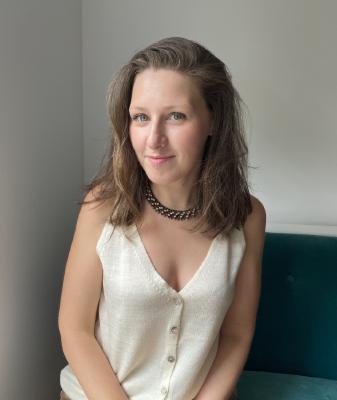
Rossella Vingelli is a PhD candidate in Philosophy at the University of Liverpool. Educated at the University of Naples Federico II, Royal Holloway, and Kingston University, her research focuses on contemporary transformations of the concept of life and on new philosophical and political perspectives emerging from the encounter between organisms, environments, and technologies. Alongside her philosophical research, she pursues an artistic practice encompassing photography, video, painting, and poetry, which she regards as complementary modes of inquiry into the complexity of living beings and their relationship with the world.
Website: www.rossellavingelli.com
Instagram: @rossellavingelli
Cover image supplied by Jean Arnaud.