Can Filial Piety Become Toxic?
In the freezing darkness of a refrigerated truck in Essex, England, a phone screen emitted its final light. The messages belonged to Tra My, a young Vietnamese woman who had left her impoverished village in search of a better future. Her final words to her mother were painfully simple: “I’m sorry, Mom… I can’t breathe.” In the final moments between life and death, what haunted her most was not only physical suffering, but guilt. She apologized because she believed she had failed in her duty to help her family, failed in her journey abroad, failed in her obligation as a daughter.
Tra My’s story is not merely a tragedy of migration. It is also a tragedy of filial piety.
Across many parts of East Asia, children grow up carrying invisible expectations. In rural villages, families compare themselves to neighbors whose children send money home from overseas. In cities, students abandon interests in art or literature to pursue medicine, law, or engineering because such careers are believed to honor the family. Many adult children quietly exhaust themselves financially and emotionally, convinced that they owe their parents an unpayable debt.

These sacrifices are often wrapped in a sacred moral language: filial piety.
But when does devotion stop being love and become self-erasure?
What Did Confucius Actually Mean by Filial Piety?
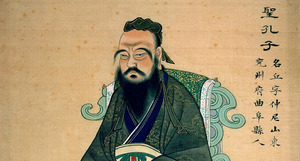
To understand how filial piety can become harmful, we must first return to its philosophical origins. In classical Confucianism, filial piety (xiao) was never intended to mean blind obedience or emotional submission. For Confucius, filial piety was rooted in ren: humaneness, compassion, and moral reciprocity.
Confucius repeatedly emphasized that caring for one’s parents involved more than material support. Feeding parents without genuine respect, he argued, was no different from feeding animals. What mattered was sincerity, gratitude, and emotional reverence.
Filial piety was also tied to self-cultivation. A good child was expected to develop moral character, act honorably, and bring dignity to the family through ethical conduct rather than passive obedience. In this sense, xiao was not about erasing individuality, but refining it.
More importantly, Confucius did not endorse obedience to wrongdoing. Classical Confucianism contains the concept of remonstration: when parents act immorally, children have a duty to advise and gently correct them. Genuine filial piety therefore included moral responsibility, not unconditional compliance.
In its original form, filial piety was meant to be reciprocal. Parents were expected to love and guide their children properly, while children responded with gratitude and respect. The relationship aimed to preserve harmony, not hierarchy for its own sake.
The problem emerged later, when this ethical ideal gradually hardened into a rigid social institution.
How Filial Piety Became Social Pressure
Over centuries, filial piety shifted from moral philosophy into a mechanism of social control. During imperial periods in East Asia, Confucianism became closely intertwined with political authority. Governments promoted the belief that loyal children would naturally become loyal subjects. Filial obedience thus served not only families, but also states seeking social stability.
As a result, the language of love slowly became the language of obligation.
In many traditional societies, parental authority extended into marriage, education, and career choices. Family honor became inseparable from personal identity. A child no longer existed solely as an individual, but as a representative of the family line.
This historical transformation still shapes modern psychology.
Many young Asians today describe themselves as debtors to their parents. They speak constantly of “repaying” sacrifice and “returning” gratitude. Such language creates an emotional economy in which love becomes transactional. The child feels permanently indebted, regardless of achievement.
The pressure is intensified by comparison culture. Parents compare children to wealthier neighbors, more successful relatives, or friends studying abroad. In poorer communities, migration itself often becomes a form of filial performance. Young people risk exploitation, dangerous labor, or illegal migration routes because they believe financial sacrifice proves moral worth.
The result is a deep culture of guilt.
In collectivist societies, personal failure is rarely experienced privately. One person’s choices are seen as reflecting upon the entire family. A child who chooses an unconventional career, refuses marriage, or prioritizes personal happiness may be accused of selfishness. Even adulthood does not necessarily end parental authority.
Under these conditions, filial piety can become psychologically suffocating. The child no longer asks, “What kind of life do I want?” but instead, “What life will disappoint my parents the least?”
At its extreme, filial piety becomes a mechanism through which individuals erase themselves in order to satisfy inherited expectations.
Can a Virtue Become Toxic?
Philosophically speaking, almost any virtue can become destructive when pushed to excess.
According to Aristotle, virtue exists in a balance between deficiency and excess. Courage becomes recklessness when taken too far. Generosity becomes self-destruction when it eliminates self-preservation. Filial piety is no exception.
Healthy filial devotion arises from gratitude and compassion. Toxic filial piety emerges when guilt, fear, and coercion replace love.
This transformation occurs when children are taught that their worth depends entirely upon sacrifice. It occurs when parents treat children as extensions of themselves rather than autonomous individuals. It occurs when emotional blackmail replaces genuine affection.
The psychoanalyst Erich Fromm distinguished between productive love and possessive attachment. Productive love helps another person grow into freedom and maturity. Possessive attachment, by contrast, seeks control while disguising itself as care.
Toxic filial piety often resembles this possessive attachment.
A parent may insist that every sacrifice was made “for the child,” while simultaneously demanding lifelong obedience in return. A child may internalize the belief that personal happiness is morally suspicious whenever it conflicts with family expectations.
Under such conditions, virtue begins to turn into pathology.
Ironically, this transformation contradicts the original ethical spirit of Confucianism itself. Confucian thought never intended filial piety to justify abuse, manipulation, or emotional domination. Once filial devotion destroys human flourishing rather than nurturing it, it ceases to function as a virtue.
A morality that demands the annihilation of the self ultimately loses its moral legitimacy.
What Would Healthy Filial Piety Look Like Today?
Modern societies do not need to abandon filial piety entirely. Family-centered ethics can provide emotional stability, continuity, and intergenerational care. The challenge is not whether filial piety should exist, but how it should be reinterpreted.
Healthy filial piety must begin with reciprocity rather than hierarchy.
Parents should recognize that children are not investment projects designed to secure family prestige. Likewise, children should understand gratitude not as permanent indebtedness, but as mature appreciation.
Respect should coexist with autonomy.
A healthy parent-child relationship allows disagreement without moral condemnation. Adult children should be able to choose careers, relationships, and lifestyles without being treated as traitors to the family. At the same time, independence should not mean emotional abandonment. Genuine care for parents remains ethically meaningful.
In this sense, modern filial piety requires balance.
A person who completely sacrifices mental health, identity, and freedom for parental approval cannot truly flourish. Yet a society built entirely upon radical individualism risks loneliness, fragmentation, and the erosion of communal responsibility.
The goal is neither absolute obedience nor absolute independence, but ethical mutuality.
Perhaps the healthiest form of filial piety today is this: caring for one’s parents without losing oneself in the process.
◊ ◊ ◊

Nguyen Quang Anh on Daily Philosophy: