The Four-Hour Workday
Are We Asking Too Little from the Future?
Every day we see news about lay-offs due to AI or how this or that job will soon automate. And while both the workers and sceptics are right to decry the cruelty of the transition, this is also a chance for a work reform that past generations could only dream of. The future is now, but are we ready for it?
A hundred years ago, the eight-hour workday was supposed to be just a step towards even shorter shifts. The economist John Maynard Keynes, writing in the 1930s, believed that the biggest problem of future generations would be just how to spend the abundance of free time:
“we shall do more things for ourselves than is usual with the rich to-day, only too glad to have small duties and tasks and routines. But beyond this, we shall endeavour to spread the bread thin on the butter—to make what work there is still to be done to be as widely shared as possible. Three-hour shifts or a fifteen-hour week may put off the problem for a great while.” (Economic Possibilities for Our Grandchildren)
So what happened along the way? Why is it that today we still worry so much about jobs? While there are many reasons for that, it is interesting to note that in Europe shorter shifts were replaced with more holidays and more robust social services. The US took a different route, with higher wages that allowed for more spending, though nowadays they have almost no free time and their salaries are worth less and less too. Watching American movies, you’d think people in that country get to do so much with their lives, but in reality it seems like they are mostly working since they have no guaranteed holidays compared to other countries that offer ≈ 40 free days a year (in paid public holidays and mandatory vacation days).

All in all, the eight-hour workday was a compromise that worked well not only for the employees but for the business world too, since workers who have time to rest and are paid decently tend to die less fast and buy more stuff. But times have changed, and the old compromise is no longer holding — working hard simply doesn’t pay off for so many of us, and if automation will really eat up 80% of jobs in the next 15 years, as Uber’s CEO recently stated, then who is going to buy all those products and services made by robots and AIs? Not to mention how there will simply be nowhere to go for the unemployed masses of tomorrow!
Now, for those concerned about practical matters, technology was never the issue, and this was just as clear a hounded years ago as it is today — we have the means to bring about a leisure society. Take it from Bertrand Russell in 1935:
“If the ordinary wage-earner worked four hours a day, there would be enough for everybody, and no unemployment—assuming a certain very moderate amount of sensible organisation. This idea shocks the well-to-do, because they are convinced that the poor would not know how to use so much leisure.” (In Praise of Idleness)
A hundred years ago, activists were building parks and libraries and community centres so that workers would put the newly found free time to good use. Today we worry that free time will be wasted on the internet – as if most of the workers around didn’t already spend every moment they could scrolling away the endless hours at their dull jobs… And even those strictly supervised who cannot use their phones at work will often just crash out at home in front of a screen anyway, unable to do anything more for the day. It would be easy to just blame social media, but this doesn’t address the reasons why so many of us need digital escapism. And a better organisation of work might just be the first step towards building a reality worth exploring.

Reforming the workday to four or even fewer hours is not a new idea. Thinkers like Bertrand Russell, John Maynard Keynes or Benjamin Franklin, among others, argued for such a path. Imagine they had regular full-time jobs; surely, they wouldn’t have been able to produce the intellectual legacy we know them for.
What new technology does today is force the issue again. And yet, we are failing to dream big enough. People in the past asked for 6- or even 4-hour shifts and managed to achieve the 8-hour workday. Today, we merely beg for job security: no wonder we get almost nothing in return and companies make plans for AI replacements or move to cheaper countries, no matter how much workers bend their heads. The time has come to once again ask for the ‘impossible’ in order to secure the decent.
You see, the people who are driving this push for automation have already made up their minds — moral issues, job stability, climate and whatnot do not impress them. They have the means to push for automation and our begging to keep things as they are is merely the cost of doing business. That is why we have to ask for more, much more — sure, you can have your AI, but only as long as we have our short shifts, or UBI, or whatever works locally.
Change is coming, want it or not, and trying to keep things as they are is missing the point. Let it also be clear: shorter working hours are just a compromise—and the main winners will still be today’s elites. This is for the very simple reason that this proposal does not fundamentally change the current system. And despite it promising to bring a much-needed improvement in the lives of the working people, the elites will maintain their status—and even see increased profits. This compromise avoids the violence of fighting, reduces the unnecessarily wasteful or cruel practices of today and makes for a more secure world—for business and for people alike.
Yes, four-hour shifts for everyone are idealistic. And that is exactly why we should advocate for just that! Modern problems require modern solutions: asking for shorter shifts will bring closer a compromise where we get the three-day weekend, universal basic services, or something even better. Let us remember the ‘art of the deal’, the way the elites play the game, and replace fear of the future with smarter negotiation now.
Perhaps the most important impact of work reform is a spiritual one (or psychological, as we like to say nowadays). We are told we live in the best of times, yet there is so much hopelessness around that many of find it easier to imagine a zombie apocalypse than a better future. The economy feels like a scam, where hard workers are replaced by robots and inflation plus rent eat away most of our earnings. More humane and fair working arrangements can bring not only material benefits, but be the foundation for a more spiritual or artistic world too.
Contemplating a world with shorter shifts, John Maynard Keynes wrote that “I see us free, therefore, to return to some of the most sure and certain principles of religion and traditional virtue.’’ I cannot fully agree with this — after all, modern problems often require modern solutions, in morals too. But I certainly believe that, in his words, this will help us ‘’once more value ends above means and prefer the good to the useful.”
And what about the people who want to work more? Nobody will stop them. They can even live in their offices for all I care. Paradoxically however, a world with shorter shifts is a more productive one, since people who enjoy their hobbies after the job will simply have more time to hone their craft and thus produce more of everything that makes life worth living. Until then, however, we need a break from the misery of having a job and the desperation of not having one!
I have expanded on the ideas from this little article in my newest book: The Four-Hour Workday: On True Productivity and the Future of Jobs. The book is already available for purchase at major online libraries, for a very moderate price (Smashwords, Amazon). You can also download a free copy at shepherdofideas.eu/books.html.

◊ ◊ ◊
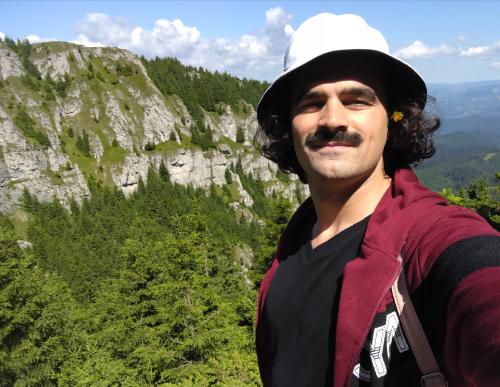
Petrică Nițoaia is a former shepherd, passionate about philosophy and animal ethics. He writes mainly on the ethics of food production, wild animal suffering, human rights and philosophical pessimism. He finds philosophy and history not only fascinating but also fun and useful for making the world a more joyful and fair place for all.
Petrică Nițoaia on Daily Philosophy: