September 27, 2026 Brentyn J. Ramm Morality Beyond the Head Sartre and Harding on Ethical Openness Such examples point to the possibility of a non-ego-based ethics. They suggest that moral action does not require deliberation or even a sense of being a separate self. (more...)
September 5, 2026 David G. Villanueva Is There Truth in Sentencing? Musings of an Ex-Con If prison is justified because it protects society, rehabilitates offenders, deters future crime, and/or restores justice, then it must ultimately be judged by whether it accomplishes those ends. (more...)
August 20, 2026 Peter Cave Fools, Heretics and a Geriatric Home in Weston-super-Mare Review of Kathleen Stock’s Do Not Go Gentle (2026) Stock’s latest work will annoy supporters of the UK’s attempts to legalise consensual assisted dying. (more...)
August 20, 2026 Petrică Nițoaia The Four-Hour Workday Are We Asking Too Little from the Future? A hundred years ago, activists were building parks and libraries and community centres so that workers would put the newly found free time to good use. (more...)
July 13, 2026 Hrayr Danageuzian The Unborn and the Obligations of the Living It is no longer only about how we treat others, but about what kind of collective future we are rationally justified in pursuing. (more...)
June 13, 2026 Ian James Kidd Better for Us if You Leave Now Human extinction, misanthropy, and a world without us Humans are the only species that can both cause and contemplate their own extinction. Our enormous technological and philosophical abilities put us in a unique existential situation. (more...)
June 6, 2026 Petrică Nițoaia Socrates’ shepherd Why these myths about animals should have stayed in the past Instead of pretending that animal rearing is a just endeavour, may we face the real nature of this practice. (more...)
May 16, 2026 Efe Teksoy Who Controls Truth in a Post-Truth Era? After the Hunt and the Media Politics of Legitimacy Luca Guadagnino’s After the Hunt renders this shift visible through a sexual misconduct allegation at Yale University. (more...)
May 3, 2026 Nguyen Minh Tri (Tonee) Nussbaum Fighting With Vietnamese Uncles on Keeping Ornamental Birds The beauty of the bird and its songs is appropriated for human enjoyment, creating a power imbalance that the Capabilities Approach identifies as unjust. (more...)
March 28, 2026 Daniel Gauss Would Socrates Have Valued AI? Plato presents Socrates' skepticism toward the written word, and the limits of what can be derived through the process of reading, in the Phaedrus. (more...)
January 25, 2026 Daniel Gauss Are Hippopotamus Ethics Enough? Feeling pain for pain may be the ethical superpower nature and evolution gave us, but is it useful enough? (more...)
John Shand Respect and Love What is meant is a form of respect that is a condition, one might say a conceptual precursor, to love proper. (more...)
Sadaf G. Zaki The Ethics of Letting Die Saving someone from attempting suicide is glorified and is considered a heroic act. In this paper, I will argue that it is not always the right course of action. (more...)
Daniel Gauss The Secret Gospel of Frankenstein What If the Creature Had Remained Uncorrupted? There is a possible archetype here of the silent, rejected saint, the unthanked helper, the monk in exile. (more...)
John Shand Taking A Side It is sometimes said in a conflict or fight between people that, ‘Sometimes one has to take a side’. To emphasise the imperative, ‘just’ is added, and we have, ‘Sometimes one just has to take a side’. (more...)
Daniel Gauss The Algorithm of the Logos AI, Moral Truth, and the Divine Pattern Recently, two Claude AI units were set to converse with one another without much intervention. What emerged wasn’t chaos or code breakdown. (more...)
Petrică Nițoaia Can We Save Morality's Reputation? Reclaiming morals in the post-truth world Why is there such a difference between the picture of morality one gets from books and the one so many people encounter in real life? (more...)
Larry Chan Fear As fauna became more complex, particularly with backboned organisms known as chordates, basic brain structures evolved. (more...)
Sadaf G. Zaki A Supportive Partner Is Not What You Need Support can come in many forms. Whatever shape it comes in, it is one of the desired characteristics in selecting a good partner. However, an all-supportive partner should not be desired… (more...)
Petrică Nițoaia The stories that keep you up at night are all made up Exploring the mythology of a mythless world Did the ancient Greeks really believe all those myths? We find it hard to imagine that people trusted the Oracle of Delphi with important decisions or prayed to such a horny and mischievous god as Zeus! (more...)
Sabahat Fida Bridging Kant and Hijab From modesty to moral autonomy From a Kantian lens, reducing a person to their appearance or sexuality treats them as a means to visual pleasure, not as a rational being. (more...)
Petrică Nițoaia How to lose friends and influence people Logical fallacies and their use Who does not know that feeling when a discussion becomes unfair, as if sabotaged? You make a good point, but suddenly the person you’re talking to says something odd, absurd or irrelevant. (more...)
Paulo Antunes Ensuring Humanity’s Future Lessons from Play, Sport, and Game I see myself and a multitude of other Grasshoppers engaged in playing the most elaborate, subtle, and challenging games. (more...)
Christopher Tricker Can Philosophy Save Us? EGO Hey, Philosophy. How can you help ensure the future of humanity? PHILOSOPHY (more...)
Nella Leontieva We and They Shortlisted entry for the Daily Philosophy Global Essay Contest 2024. (more...)
Deanna S. Lee A “Philos” of We . Shortlisted entry for the Daily Philosophy Global Essay Contest 2024. (more...)
Daniele Fulvi Philosophy and the Climate Crisis Thinking Clearly to Help Ensure the Future of Humanity Philosophy and the Climate Crisis. Shortlisted entry for the Daily Philosophy Global Essay Contest 2024. (more...)
Daniel Gregory The Surprising Threat to Human Society How can philosophy help ensure the future of humanity? Shortlisted entry for the Daily Philosophy Global Essay Contest 2024. (more...)
Avery Warfield How Many Cows Does It Take? Navigating the Trolley Problem's Moral Dilemma Here, instead of five people versus one person, the trolley is heading toward N cows and diverting it will kill one person. (more...)
Christopher Belshaw Still Against Veganism A reply to Petrică Nițoaia My question was – and still is – a short good life with a pain free death, or no life at all, which would you prefer? A reply to Petrică Nițoaia. (more...)
Petrică Nițoaia Embracing Kindness The Moral Argument for Veganism Ethical arguments against veganism are examined and refuted. (more...)
John Shand Evil: Ordinary or Extraordinary? Are the people who perform evil acts ordinary or extraordinary? Just like other people or exceptional people? (more...)
Can You Steal a Culture? Making sense of cultural appropriation For a long time, we have been watching the public discussion on cultural appropriation. Many writers and philosophers, even guests we have interviewed here on Daily Philosophy, have been reluctant to discuss the topic in public. (more...)
Abortion: The Unconscious Violinist Argument Judith Jarvis Thomson: A Defense of Abortion Is abortion ethical? Philosopher Judith Jarvis Thomson created one of the most well-known thought experiments in modern ethics. In her 1971 paper “A Defense of Abortion,” she presents the thought experiment of the unconscious violinist. (more...)
Kant’s Ethics: What is a Categorical Imperative? A Daily Philosophy primer Kant’s ethics is based on the value of one’s motivation and two so-called Categorical Imperatives, or general rules that must apply to every action. (more...)
What is ethics? Of means and ends Ethics is the study of how we ought to behave, and why. There are many different theories of ethics, which we briefly discuss in this article. (more...)
Andreas Matthias Dan Demetriou on the Ethics of Colonial Monuments Philosopher interviews When is it right to remove colonial statues? When should we rewrite old books that are not politically correct any more? (more...)
When Is It Right to Break the Law? Ethics and law are not the same Ethics and the law are not the same and it can indeed be morally right, and even indicated, to break the law in certain situations. (more...)
David Charles The Surprising Ethics of Climate Change Given that climate change is, quite literally, an existential problem, it’s strange that we’re not all rushing to solve it. (more...)
Josh Milburn Just Fodder Book Review A reply to Andreas Matthias Author’s reply to a review in Daily Philosophy of: Josh Milburn, “Just Fodder. The Ethics of Feeding Animals.” (more...)
Andreas Matthias Just Fodder. The Ethics of Feeding Animals Book review Josh Milburn’s “Just Fodder” is a very thoughtful and rigorous analysis of the ethical issues related to feeding animals. (more...)
What is Utilitarianism? A Daily Philosophy primer Utilitarianism is a moral theory that states that the morally right action maximizes happiness or benefit and minimizes pain or harm for all stakeholders. Proponents of classic utilitarianism are Jeremy Bentham (1748-1832) and John Stuart Mill (1806-1873). (more...)
Andreas Matthias Should a Liberal State Ban the Burqa? Book review Should a Liberal State Ban the Burqa? by Brandon Robshaw, is a very clear, instructive and carefully argued book that shows off philosophy at its best. (more...)
Catherine Greene What is Ethical Investing? We all want our money to serve the right cause – but how can we make sure that it will? Catherine Greene on what is involved in ethical investing and ESG considerations. (more...)
David E. Cooper Necessary Vices In our societies, an impressive array of vices is on display. Hypocrisy, greed, cruelty, prejudice… But what if many of these vices were necessary for human life? (more...)
Albert Schweitzer on the Reverence for Life Philosophy in Quotes Explore philosophy through its most famous quotes! Today: Philosopher and Theologian Albert Schweitzer on the Reverence for Life. (more...)
John Shand Kant’s Joke: Are Practical Jokes Wrong? According to Immanuel Kant, practical jokes would be considered immoral because they treat the subject as mere means to others’ enjoyment. (more...)
Luke Roelofs When Does a Fetus Have Rights? What sort of rights should a fetus or embryo have? A clear, comprehensive review of the arguments. (more...)
Yamile Abdala Rioja What does “March of the Penguins” have to do with Kant? According to Kant, we wouldn’t be able to talk about ethics at all if we couldn’t see us as free beings who are capable of deciding. (more...)
Are We Allowed to Destroy Art? Jimmy Carr is taking a hammer to Hitler A new TV show fronted by Jimmy Carr will destroy artworks from artists ranging from Picasso to Hitler. Is this a bad thing? We look at the arguments for and against destroying art for entertainment. (more...)
How Free is Free Enough? Ronald Dworkin on free speech and censorship Today, we are confronted with the need to weigh free speech against other values like inclusivity, respect and tolerance. We look at the arguments of philosopher Ronald Dworkin in defence of free speech. (more...)
Is Abortion Ethical? The main arguments Is abortion morally right? We look at the main arguments for and against abortion. (more...)
Ezechiel Thibaud What’s Wrong with The Passion Economy? Adam Davidson’s “The Passion Economy” Adam Davidson describes the “Passion Economy” in a book released in 2020. This article shows why Davidson’s proposal is not a sustainable solution to fix our current relationship with work. (more...)
The Principle of Double Effect Philosophy and current affairs Should we teach philosophy to young people when accounting would be better for them? Is driving a car morally bad? Meet the doctrine of Double Effect. (more...)
David E. Cooper Jeremy Bentham on Animal Ethics Philosophy in Quotes A history of philosophy in its most famous quotes. Today: Jeremy Bentham on the suffering of animals: “The question is not, Can they reason? nor, Can they talk? but, Can they suffer?” (more...)
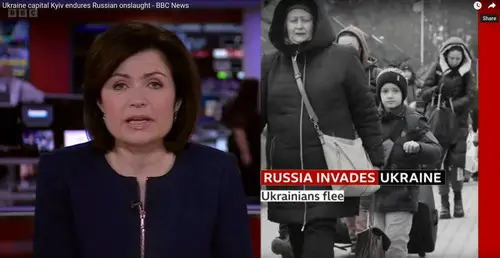
The Ukraine Conflict: Conduct in War Philosophy and current affairs What are the laws that apply during a war? We discuss the jus in bello and the requirements of discrimination, proportionality and necessity. Just War Theory applied to the current conflict in the Ukraine. (more...)
The Ukraine Conflict and the Ethics of War Philosophy and current affairs What are the moral rules for war, how can wars be justified and are we obliged to help a country that has been attacked? Just War Theory applied to the current conflict in the Ukraine. (more...)
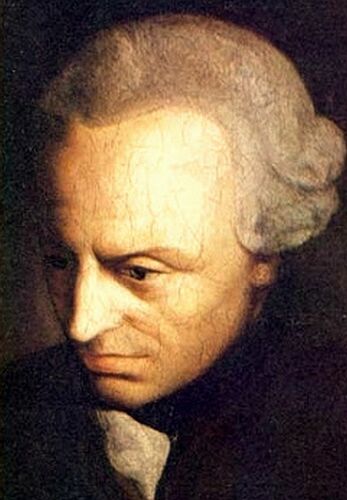
Immanuel Kant on Means and Ends Philosophy in Quotes Explore philosophy through its most famous quotes! Today: Immanuel Kant on how to treat human beings. (more...)
John Shand The Empathy Paradox It is often supposed that greater empathy is a good thing. But this is a mistake, unless one assumes that being empathetic will inevitably bring it about that one treats others better. (more...)
Is Lying Ethical? Lying, deception and when they are justified Lying is generally perceived as unethical behaviour. Depending on the moral theory used, lying in special circumstances (for example, “white” lies or lies that benefit others or avert harm) might be morally justifiable. (more...)
Sofia Jeppsson Retributivism and Uncertainty Why do we punish criminals? Why do we have a criminal justice system? What could possibly justify the state punishing its citizens? Retributivism is the view that we ought to give offenders the suffering that they deserve for harming others. (more...)
Ezechiel Thibaud Nudges The hidden influencers In a book published in 2008, R. H. Thaler and C. R. Sunstein define nudges as “any aspect of the choice architecture that alters people’s behaviour in a predictable way.” (more...)
Lucy Weir Agency in the Anthropocene How much choice do you actually have? If we are natural beings who evolved with everything else, why have we had such a hugely detrimental impact on that biosphere, which also happens to be our home? (more...)
John Shand What Are We Responsible For? Intentions, consequences and character How far does our responsibility extend? What can we rightly be regarded as responsible for? (more...)
Is Data Science Evil? What does “Don’t Be Evil” really mean? Computers have a long history of being associated with evilness. Machine minds without emotions suggest cruelty, unflinching execution of inhuman orders. (more...)
Seven Reasons to Outlaw Recreational Drugs The main arguments Should we legalise recreational drug use? This article explains seven arguments against legalising recreational drugs. (more...)
Dan Weijers, Nick Munn, Lorenzo Buscicchi Happy Endings Does size or shape matter most? We’ve heard it all our lives — size matters and bigger is better. But David Velleman wants you to believe that shape can matter more! (more...)
John Shand Assisted Voluntary Euthanasia The main arguments This a systematic survey of the arguments and counterarguments that are most commonly in play when considering the ethical rights and wrong of euthanasia and whether it should be legally permitted. (more...)
Nick Munn, Lorenzo Buscicchi, Dan Weijers Selling Happiness, One Chump at a Time We are not water pills. We are highly scientific magic pills based on an ancient organic recipe. (more...)
Nick Munn, Lorenzo Buscicchi, Dan Weijers The Utility Monster is... other people! Imagine waking up every evening, putting on your happy face, walking over to your immaculately laid out recording studio and… Enthusiastically unwrapping that mysterious package someone just sent you… You have no idea what it is, no really! (more...)
Six Reasons to Legalise Recreational Drugs The main arguments Should we legalise recreational drug use or not? This article explains the most important six arguments in favour of the legalisation of recreational drugs. (more...)
Lorenzo Buscicchi, Dan Weijers, Nick Munn Enlightened Self-Interest Friends with benefits If you explain to a friend that Hedonistic Egoism advocates the pursuit of one’s own pleasure, the first reaction you may get is: “so why not kill a person, steal his money and buy a new phone?” If you do get this reaction, it may be time to get a new friend. (more...)
Kant’s Praiseworthy Motivation Ethical behaviour can be demanding A core feature of Kant’s ethics is his insistence on the value of one’s motivation for the morality of an action. As opposed to utilitarianism, Kant does not look at the consequences when judging actions, but only at what he calls the “good will.” (more...)
Lorenzo Buscicchi, Dan Weijers, Nick Munn Psychological Hedonism You Know You Want It According to Psychological Hedonism, we are all just looking for fun. Psychological Hedonism is a theory about motivation. (more...)
Dan Weijers, Nick Munn, Lorenzo Buscicchi Simulating Pleasure If it feels good, does it matter whether it’s real? Nozick asked readers to imagine a machine produced by “super-duper neuropsychologists” that could give you any experience you could think of without you realising it was all a computer simulation. He called it the Experience Machine. (more...)
Dan Weijers, Nick Munn, Lorenzo Buscicchi Is Pleasure Good? Don’t forget your safe word Hedonists believe that pleasure is the only thing that ultimately makes our lives go well for us and that pain is the only thing that ultimately makes our lives go badly for us. If that’s true, why are so many hedonists into BDSM? (more...)
Who Gets the Vaccine First? Philosopher John Rawls on justice and privilege How should we go about distributing a scarce vaccine? Philosopher John Rawls formulated two principles of justice that we can use to guide our decisions. (more...)
Vaccination Ethics Can the state force us to get vaccinated? Vaccination ethics is a surprisingly rich field of philosophical inquiry, and it covers issues from all major moral theories, reaching into world politics, poverty, the role of the state and the morality of taxation and car seat belts. (more...)
Hedonism, Pleasure and Happiness Is pleasure the same as happiness? Hedonism is the thesis that happiness and pleasure are the same. But is that true? Does the enjoyment of pleasures like good food, chocolate, sex and a myriad other things that we consume everyday — do these things really make us happier? (more...)
Martha Nussbaum and the Capabilities Approach What makes a human life worth living? In the capabilities approach, philosopher Martha Nussbaum argues that a human life, in order to reach its highest potential, must include a number of “capabilities” – that is, of actual possibilities that one can realise in one’s life. (more...)
How to Live an Aristotelian Life Become happy through being good Aristotle’s theory of happiness rests on three concepts: (1) the virtues; (2) phronesis or practical wisdom; and (3) eudaimonia or flourishing. (more...)
Human Dignity and Freedom Why restaurant menus may be destroying humanity Erich Fromm and Richard Taylor on the perils of capitalism. (more...)
Is Stealing Always Immoral? Utilitarianism, Kant and Aristotle In utilitarianism, stealing would only be immoral if it leads to bad consequences for the stakeholders. For Kant, it would always be immoral. (more...)
What Is Deontological Ethics? Immanuel Kant and not looking at outcomes Deontological ethics is about actions that must be performed (or must not be performed) because the actions themselves are intrinsically good or bad. (more...)
What Is a Fair Share of Life? The Fair Innings Argument in bioethics The “Fair Innings Argument” assumes that there is such a thing as a fair share of life. But can we compare different lives in this way? (more...)
Aristotle's Highest Good In the Nicomachean Ethics, Aristotle argues that we can recognise the highest good because we do everything else for its sake, while we never say that we pursue the highest good for any other thing’s sake. For Aristotle, the highest good is the happy life. (more...)
The Ethics of Organ Transplants Can you kill one to save many? Are we ever allowed to kill one in order to save many lives? Utilitarianism would look at the overall benefit and conclude that this might be permissible. (more...)
Peter Singer's Drowning Child Are we required to save lives if we can? Peter Singer’s Drowning Child thought experiment: If, on the way to the office, we saw a child drowning in a pond, would we think that we have to save it? (more...)
Is Whistleblowing Ethical? ...and why Confucius might disagree Whistleblowing might be wrong because it violates one’s obligations to one’s friends, relatives, co-workers or superiors. (more...)
The Ethics of Eating Meat Four moral theories and their views Eating small quantities of meat that was grown in a sustainable way might be morally justifiable, while large-scale animal farming is probably morally wrong. (more...)
Confucius on Loyalty and Betrayal Would you send your father to prison? For Confucius, one’s personal loyalties to family, friends, co-workers and superiors are more important than the rules of some abstract ethical theory. (more...)
Kant on Autonomy and Human Rights Are humans meant to be free? The theory of evolution changed our understanding of our own humanity, but overlooks that we are able to act against our instincts and to be truly free. (more...)
Life Is a Skill Aristotle's Eudaimonia Aristotle on living a life well through exercising one’s virtues. (more...)
Aristotle on moral development The three types of human beings For Aristotle, the moral development of a person progresses in three stages: from akrates, to enkrates, to sophron or wise person. (more...)
Freedom is always the freedom to think otherwise Rosa Luxemburg today Rosa Luxemburg (1871-1919), socialist revolutionary, once said: “Freedom is always and exclusively freedom for the one who thinks differently.” (more...)
Is it stupid to hoard toilet paper? Sometimes, weird behaviours can be rational It is too often assumed that hoarding commodities in a crisis is irrational and that everyone would be better off if nobody was hoarding things. But there are arguments to the contrary. (more...)
The Gift of Sinning. Autonomy, Surveillance and Freedom. How surveillance undermines morality Surveillance, instead of forcing citizens to behave more ethically, in reality undermines the essence of morality. According to Immanuel Kant as well as the Bible, the free human choice is the basis for all moral behaviour. (more...)
Virtue Ethics Virtue ethics asks not what you should do but what kind of person you should be. This guide explains the …