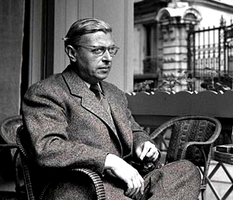
Mahatma Gandhi
The man who turned non-violence into a political weapon
Mohandas Karamchand Gandhi (1869–1948) did something nobody had done before him. He showed that an unarmed people could confront an empire and win – not by begging for its pity, but by making the cost of ruling them morally and politically unbearable. The method he invented for this, satyagraha or non-violent resistance, has since been borrowed by Martin Luther King, by the movement against apartheid, by the crowds who brought down communism in Eastern Europe, and by countless smaller campaigns for dignity and rights.
Gandhi disliked being called a philosopher and insisted there was “no such thing as Gandhism.” But his writings, which run to a hundred volumes, contain a coherent and radical account of truth, non-violence, freedom and the good life, developed through what he called “experiments” conducted on himself. The honorific by which the world knows him, Mahatma (Sanskrit mahātmā, “great soul”), was given to him by others; he found it embarrassing.

Who was Gandhi?
Gandhi was born on 2 October 1869 in Porbandar, a small princely state on the coast of Gujarat in western India. His family belonged to a merchant caste, and his father served as chief minister to the local prince. His mother was intensely devout, given to fasts and vows. The region was steeped in Jainism, an ancient Indian religion whose supreme principle is to harm no living being, and in Vaishnavism, the branch of Hinduism that worships God as Vishnu and his incarnations, especially Rama and Krishna. A mother’s piety, Jain scruple about harming life, and devotion to a personal God called Rama stayed with him all his life. He was married at thirteen, by family arrangement, to Kasturba; the marriage lasted sixty-two years.
In 1888 he went to London to train as a barrister, having promised his mother to abstain from meat, wine and women. He was a shy, unremarkable student, but outside the law school he joined the Vegetarian Society, met Christian radicals and Theosophists, and discovered two books that became his lifelong scriptures: the Bhagavad Gita (“Song of the Lord”), a short Sanskrit poem in which the god Krishna instructs the warrior Arjuna on duty, action and devotion; and the New Testament, whose Sermon on the Mount, he said, “went straight to my heart.”
Unable to establish a practice in India, Gandhi accepted a year’s legal work in South Africa in 1893. He stayed twenty-one years. A week after arriving he was thrown out of a first-class railway compartment for being “coloured” and spent a cold night on the platform at Pietermaritzburg; he later named this the turning point of his life. He organised the Indian community against discriminatory laws, founded a newspaper, and in 1906 led a mass oath in Johannesburg to resist a humiliating registration law non-violently and accept the consequences. Thousands went to prison, Gandhi among them. In South Africa he also founded two communal farms where people of all religions worked with their hands and cleaned their own latrines – a task reserved in India for the lowest castes – took a vow of lifelong celibacy, read Tolstoy, Ruskin and Thoreau, and wrote the small book that contains his whole philosophy in germ.

Mohandas K. Gandhi in London, 1931. Image: Wikimedia Commons.
He returned to India in 1915 and within a few years had turned the Indian National Congress from a debating society of lawyers into a mass movement. He led three great campaigns against British rule: Non-cooperation (1920–22), which he called off when a crowd burned policemen alive; Civil Disobedience (1930–34), opened by the Salt March, in which he walked 240 miles to the sea to make salt in defiance of the government monopoly; and Quit India (1942), which put him in prison for the last time. Between campaigns he withdrew to what he thought the more important work: hand-spinning, village sanitation, Hindu-Muslim unity and the abolition of untouchability.
His last years were tragic. He had always insisted that Hindus and Muslims were one people; India was nevertheless partitioned at independence in August 1947, amid massacres on both sides. Gandhi did not celebrate. He fasted twice to stop the killing, in Calcutta and Delhi, both times successfully. On 30 January 1948, on his way to his evening prayer meeting, he was shot dead by Nathuram Godse, a Hindu nationalist who believed Gandhi had betrayed Hindus by his concern for Muslims.
The main works
Gandhi wrote constantly – letters, newspaper columns, pamphlets – but mostly in response to events, and almost never as a system. Three works stand out.
Hind Swaraj (Indian Home Rule, 1909) – Written in ten days on a ship from London to South Africa, in the form of a dialogue between a “Reader” and an “Editor.” It is a ferocious attack on modern industrial civilisation and the first statement of his theory of non-violent resistance. Gandhi never retracted a word of it. It is short and the best place to start.
An Autobiography, or The Story of My Experiments with Truth (1927–29) – Written in weekly instalments for his newspaper, it covers his life only to 1921, but is unlike any other political memoir: a confession of his failures, his struggles with diet, sex and anger, and his slow discovery of the principles he lived by.
Collected Works – The hundred-volume edition of everything he wrote and said, available free online (see the links below). Readers in a hurry should look for anthologies: Raghavan Iyer’s The Moral and Political Writings or the Penguin Essential Writings.
The big ideas
Gandhi’s thought is best approached through a handful of Indian terms which he took from tradition and reshaped.
Truth (satya)
The Sanskrit satya comes from sat, “being” or “that which is.” For Gandhi, truth was therefore not primarily a property of statements but the name of reality itself – and ultimately of God. He first wrote that “God is Truth,” then deliberately reversed the formula to “Truth is God,” so that atheists could join him.
Two things follow. Because truth is absolute and we are finite, no one possesses it entirely, and so no one has the right to force another to accept their version of it: non-violence follows from humility about truth. And because truth is reality, living truthfully means a complete correspondence between what you believe, say and do. Gandhi treated his own life as the laboratory for this.
Non-violence (ahimsa)
Ahiṃsā means literally “non-harming.” In Jain and Hindu tradition it was chiefly a negative rule for monks: do not kill, do not injure. Gandhi made it positive and universal. Ahimsa in his sense is active love, including love for the opponent, and its field is not the monastery but politics. He insisted it was not passivity: “Non-violence is the greatest force at the disposal of mankind.”
Non-violence is also the only means consistent with a good end. Means and ends are related as seed and tree: a free society cannot be built by violent methods, because the methods become the society. The non-violent resister must be ready to suffer, even to die, but never to kill – and Gandhi thought this took more courage than soldiering. He admitted that where the only choice was between cowardice and violence he would choose violence.
Satyagraha
Gandhi’s most original contribution combines the two terms above: satya (truth) and āgraha (firm grasp) – “holding fast to truth,” or as he often translated it, “soul-force.” He coined the word because he disliked the English phrase “passive resistance,” which suggested the weapon of the weak and left room for hatred.
Satyagraha is a method of conflict in which one refuses to cooperate with an injustice, openly and after fair warning; accepts the legal penalty without resentment; and seeks throughout to convert rather than defeat the opponent, appealing through one’s willingness to suffer to the conscience that even a tyrant possesses. It has rules: no secrecy, no violence in word or deed, no exploiting the opponent’s moments of weakness, and willingness to compromise on everything except the essential point.
It also has a discipline. The satyagrahi needs tapas – a Sanskrit word meaning “heat,” traditionally the ascetic austerity by which sages gained spiritual power – which Gandhi reinterpreted as the self-purification, through fasting, prayer and vows, that gives the resister strength to suffer without hitting back. The public fast, which he undertook some seventeen times, was the extreme form. He insisted it must never be used to coerce an opponent, only to move those who loved him.

Gandhi during the Salt March, March 1930. Image: Wikimedia Commons.
Self-rule (swaraj)
Swarāj means “self-rule,” and in Gandhi’s day meant independence from Britain. He kept the political sense but gave the word its literal weight: swa (self) rāj (rule) is first of all the rule of the self over itself. A people incapable of self-restraint would merely exchange a British raj for an Indian one – “English rule without the Englishman.”
In Hind Swaraj he went further and denounced modern civilisation itself – railways, lawyers, doctors, machinery – as a disease that multiplied wants and made people “slaves of their bodies.” The critique owes much to Tolstoy and Ruskin, but its root is Indian: the ideal of the person who has limited his desires and is therefore free.
Economics: swadeshi and sarvodaya
From these principles followed an economic programme. Swadeshi (“of one’s own country”) meant preferring the products of your neighbours to those from far away – in practice, boycotting imported cloth and spinning cotton at home on the wheel (charkha), which became both the uniform of the national movement and Gandhi’s daily spiritual discipline. Bread labour, borrowed from Tolstoy, meant that everyone should do some manual work for their keep. Trusteeship meant that the rich should hold their wealth as trustees for the poor, persuaded by non-violent pressure rather than expropriated. And sarvodaya (“the welfare of all”), a word Gandhi coined, was meant to replace the utilitarian “greatest good of the greatest number,” which he thought licensed the sacrifice of minorities. His ideal was the self-sufficient village, and his politics were decentralist to the point of anarchism.

Gandhi at the spinning wheel. Image: Wikimedia Commons.
Religion and caste
Gandhi called himself a traditional Hindu, but his Hinduism was selective and his own. He read the Gita not as a call to battle but as an allegory of the war within the soul, and drew from it the doctrine he valued above all: anāsakti, non-attachment – act, but without craving the fruits of action. He held that all religions were true and all imperfect; his ashram prayers combined Hindu hymns, Quranic verses and Christian hymns. His ideal of Rām Rājya, “the kingdom of Rama,” was not a Hindu state but the kingdom of God on earth, a society in which the poorest were cared for.
Caste was the most contested area of his career. He regarded untouchability – the exclusion of the lowest castes from temples, wells and schools – as “the greatest blot on Hinduism,” admitted untouchables to his ashrams, and fasted against their political segregation. But for most of his life he defended the ancient fourfold caste order as a division of labour that could be purged of hierarchy. The Dalit leader B. R. Ambedkar, who held that caste could only be destroyed, not reformed, regarded this as evasion, and his criticism has grown in weight.
Why Gandhi matters – and where he fails
Gandhi has never lacked critics, and a serious appreciation has to take them on board. The left thought him a brake on revolution; Hindu nationalists killed him for being soft on Muslims; Ambedkar found his paternalism unbearable. George Orwell, in a shrewd and largely admiring essay, objected to the inhuman perfectionism of a saint who recommended non-violent resistance to the Jews of Europe. His early years in South Africa include disparaging remarks about Africans that he outgrew but never explicitly repudiated. His treatment of his family was harsh, his hostility to modern medicine eccentric, and his late “experiments” in celibacy, which involved sleeping beside young women followers to test his continence, troubled even his admirers.
Yet the balance is extraordinary. The political scientists Erica Chenoweth and Maria Stephan, surveying the twentieth century, found that non-violent campaigns succeeded roughly twice as often as armed ones: Gandhi’s central claim, that unarmed resistance is a form of power, has been empirically vindicated. His warning that a civilisation built on the endless multiplication of wants would destroy itself and the earth, dismissed in 1909 as the crankery of a man who disliked railways, looks more prescient with each decade. And his insistence that means determine ends – that a liberation won by terror produces a terrorist state – was borne out often enough by the century that followed.
Relevance to life
Gandhi was a political leader, but his deepest claim was that political reform without personal reform is worthless. That makes him unusually easy to apply to an ordinary life.
Means are ends in the making. How you fight for something becomes part of what you win. Anger, deceit and contempt, even in a good cause, build themselves into the result. The next time you are in a conflict – with a colleague, a family member, a stranger online – Gandhi’s question is not “how do I win?” but “how do I act so that winning would be worth having?”
Treat the opponent as convertible. Satyagraha rests on the assumption that even your adversary has a conscience that can be reached. This has become harder and rarer in an age that sorts people into enemies to be eliminated. Gandhi’s bet was that the person who refuses to hate ends up with more power, not less.
Freedom begins with self-rule. The person who cannot govern their own appetites is not free, whatever the constitution says. Gandhi’s vows, fasts and spinning were his tools for this; the principle does not depend on the tools. His austerities are not for everyone, but his diagnosis is: a life of ever-multiplying wants is a form of servitude.
Truth is something you do. The gap between what we believe, what we say and what we actually do is, for Gandhi, the fundamental moral problem, and closing it is a lifelong experiment rather than a one-time decision. He called his autobiography a record of experiments, not achievements, and he published his failures.
Do the small work. Gandhi thought that spinning thread and cleaning latrines mattered as much as negotiating with viceroys. Whatever we think of the economics, the attitude is worth keeping: that no task is beneath dignity, and that the daily, unglamorous practice is where character is actually built.
Gandhi was exasperating, occasionally absurd, and sometimes wrong. He was also the one political leader of his century whose life can be examined as a whole without shame. He asked to be judged by his actions rather than his words, and the test of his teaching was that he was prepared to die for it – which he did, with the name of God on his lips, at the hands of a co-religionist who thought he loved his enemies too much.
Where to start reading
By Gandhi
- Hind Swaraj, or Indian Home Rule (free PDF, mkgandhi.org) – the 1909 text containing his whole philosophy in brief. Anthony Parel’s annotated edition (Cambridge University Press, 1997) is the best printed version.
- An Autobiography, or The Story of My Experiments with Truth (free PDF, mkgandhi.org) – covers his life only to 1921, but indispensable.
- Gandhi Heritage Portal – the complete Collected Works of Mahatma Gandhi and other primary sources, free online.
About Gandhi
- Mahatma Gandhi – Encyclopaedia Britannica – a reliable overview of the life.
- Mahatma Gandhi – Wikipedia – detailed and well referenced.
- Bhikhu Parekh, Gandhi: A Very Short Introduction (Oxford University Press, 2001) – the clearest short guide to the thought.
- Ramachandra Guha, Gandhi Before India (2013) and Gandhi: The Years That Changed the World (2018) – the fullest modern biography.
Critics and legacy
- George Orwell, “Reflections on Gandhi” (1949), The Orwell Foundation – the classic sympathetic critique.
- B. R. Ambedkar, What Congress and Gandhi Have Done to the Untouchables (1945), PDF – the most important Indian critique, from the Dalit leader.
- Erica Chenoweth and Maria J. Stephan, Why Civil Resistance Works (Columbia University Press, 2011) – the statistical case that non-violent campaigns outperform violent ones.
- International Day of Non-Violence – United Nations – on the observance of Gandhi’s birthday, 2 October.