Morality Beyond the Head
Sartre and Harding on Ethical Openness
Introduction
Consider a common occurrence. An ordinary person is going about their business when there is a sudden emergency which endangers someone’s life. That person despite their fear, or often multiple people, unthinkingly spring into action. This may be running into a burning building and dragging out its unconscious occupants. Or jumping into treacherous waters to save a drowning child. We call these people heroes. When asked about why they did it afterwards, however, it is just as common for that person to say that they weren’t a hero at all, they just did what needed to be done. In such situations reflective thought and egoistic self-interest take a back seat and we just respond to a moral need. These examples challenge standard Western theories of ethics that hold that ethical responses are (or should be) grounded in reflective moral deliberation and the following of moral rules. Or more plainly that ethics requires a separate thinking self. The cases of everyday heroes on the other hand point to their extraordinary actions arising from an immersion in the situation rather than being stuck in their heads.
Such examples point to the possibility of a non-ego-based ethics. They suggest that moral action does not require deliberation or even a sense of being a separate self. In fact, these may be what often gets in the way of responding to a moral need. The idea that selflessness leads to compassion is familiar from Buddhism and other Eastern traditions. But you don’t need to accept any of that to follow the argument here. Rather it emerges from a surprising Western phenomenological source — Jean-Paul Sartre. The phenomenological basis of the insight means that it can be tested right now, in your chair, with nothing more than your own direct attention.

In The Transcendence of the Ego (TE),1 Jean-Paul Sartre developed an account of selflessness. He argued that consciousness is fundamentally non-egological, and that meaning, including ethical significance, is given in the world prior to reflective thought. The moral phenomenology developed in this short book is profound and yet remains under-explored. According to Sartre, we do not first encounter neutral facts and then impose a moral interpretation. The ethical salience of a situation and the demand that it makes of us is already present in how it appears to us. We just need to get out of the way so that the ethical response can naturally flow.
While Sartre describes in detail how non-reflective consciousness grounds ethical responsiveness, he doesn’t provide a method for reliably accessing this moral openness in our everyday lives. Most moral demands made of us do not occur in emergencies. As such egoistic and self-interested thought all too often get in the way of a compassionate response. Like Sartre, Douglas Harding (1909-2007) also developed a sophisticated phenomenology of consciousness and the self. He called this ‘the Headless Way’. He was an architect by trade and a philosophical renegade who spent much of his later life in Nacton, a quiet Suffolk village. His work remains outside the mainstream, though is seeping into philosophy here and there.
Harding developed a parallel phenomenology of egoless consciousness, but went further by providing systematic first-person experiments for recognising this directly, in any situation, without years of phenomenological training or meditative practice. He showed not just how to get out of one’s head and into the situation, but to recognise that you were never in your head from your own perspective. You are already built open to others and their needs. It’s just a matter of recognising this. Here I will use Harding’s first-person experiments to explore how practising the recognition of your openness to others may reshape your ethical responses. The argument of this article, in brief, is that Sartre shows us what genuine ethical responsiveness looks like in first-person experience, and Harding shows us how to get there.
Sartre, Egoless Consciousness and Ethical Responsiveness
Jean-Paul Sartre was a mid-twentieth century French existentialist and Parisian Café intellectual. His philosophy of freedom was grounded in careful observation of experience in just such ordinary surroundings.
Importantly for our purposes, Sartre’s understanding of first-person consciousness is non-egological, meaning that there is no self built into consciousness. The self is secondary rather than basic. In particular, Sartre rejects Husserl’s transcendental ‘I’, the notion that there is an inner inhabitant behind all of one’s experiences. He also rejects the notion that an ‘I’ is needed to unify conscious experience, because consciousness itself is already unified and hence makes the transcendent I superfluous.
Even assuming that consciousness does not require an ego, we still need to account for the fact that there is often a sense of self (even if it’s not essential to consciousness). Sartre distinguishes between reflective and non-reflective consciousness. He observes that in non-reflective consciousness there is no sense of ‘I’. When I run for a streetcar, there is just an experience of the ‘the-street-car-having-to-be-overtaken’ (TE, p. 49). There is total absorption in the situation and no subject-object structure to the experience. Here we can recognise the same kind of flow state which can occur in emergencies, but for Sartre it’s something we naturally slip into all of the time because it’s just how consciousness is structured.
While a self is not essential to consciousness, the sense of self does occur in reflective consciousness, such as when I purposely think about myself in relation to an unfolding situation. In fact, even when I am thinking about myself the ‘I’ is not central, but appears as another object of consciousness. Sartre hence quotes approvingly Rimbaud’s remark that ‘I is an other.’ (TE, p. 97) Recognising this is itself a profound shift in consciousness.
As we’ve been exploring, in Sartre’s account, consciousness is essentially non-egoic. This underlying selfless consciousness is primarily recognised in non-reflective flow states. Sartre goes on to apply this account to moral phenomenology. He observes that the ethical urge exists before self-reflection and even ethical reasoning. Suppose I see that Peter is in trouble:
I pity Peter, and I go to his assistance. For my consciousness only one thing exists at that moment: Peter-having-to-be-helped. This quality of “having-to-be-helped” lies in Peter. It acts on me like a force… I am in the presence of Peter’s suffering just as I am in the presence of the color of this inkstand; there is an objective world of things and of actions, done or to be done, and the actions come to adhere as qualities to the things which call for them.' (TE, p. 56)
For Sartre then there is a spontaneous ethical urge, which I call ethical responsiveness. It is in reflective thought that this natural ethical responsiveness often comes to be supressed. Here Sartre effectively reverses Kantian ethics which assumes that the basis of ethics is a bounded rational self that morally deliberates. While moral deliberation is certainly an important aspect of the ethical sphere, for Sartre, it is grounded in non-egoic ethical perception and a spontaneous moral urge. The world is already coloured with moral qualities which demand our response, before a single thought about right, wrong or what ‘I should do’ arises. This is the basis on which ethics is built. In fact, it is at the reflective level that ethical spontaneity, according to Sartre, is often ‘poisoned’.
As an example, consider the experience of walking along and seeing a homeless person asking for money. The unadulterated perception is ‘that-person-needs-to-be-helped’. The urge to help is part of that very perception. However, then reflective thought kicks in and this ethical responsiveness is all too often suppressed. In particular, self-interest begins to assert itself. I think to myself, ‘I’m in a hurry’, ‘I have no time to give money,’ or ‘I don’t have any change’ or ‘I can’t help everyone’ etc. As such our natural ethical responsiveness is short-circuited. This being said, Sartre goes on to qualify that this does not mean that all non-reflective actions are always altruistic and all reflective actions egoistic (TE, pp. 58-59). The ethical reasoning which arises may in fact reinforce the non-reflective ethical urge. Although not discussed by Sartre, we can also recognise the limitation to non-reflective moral consciousness. Our prejudices are often deeply ingrained. Our conditioning may mean that we disdain some people and value others, such that our spontaneous response may be to reject certain people, see them as a threat, or even to lash out at them. We can see then why mere spontaneity is not a guarantee of morality.
A defender of the non-egoic theory of morality, such as Asian philosophies (a salient example being Buddhist mindfulness practices), may counter that selfish and prejudiced responses are only automatic due to a lifetime of conditioning. It is the work of a spiritual practice to undo that conditioning. By mindfully watching one’s thoughts over many years, one becomes non-attached to them and egoic processes die down. Hence our ethical responsiveness may once again become pure. At least, so the story goes. While of course useful (I myself am a long-term meditation practitioner), there is a significant limitation to this approach. The experience of egolessness is generally most deeply fostered in silent retreats. The sense of non-separation comes partly from a withdrawal from social life. The problem is that the deep peace and non-separation experienced in meditation tends to quickly dissipate once one gets off of the meditation cushion and re-enters the fray and messiness of social situations. What is needed is not a gradual path of ego-attrition but a direct seeing of what is already the case — and one that remains available in the midst of ordinary life.
Here Douglas Harding’s headless perspective adds immense value. Like Sartre, Harding also observed that the world is not perceived as neutral, but already coloured with ‘subjective’ qualities. Harding notes that as third-person science progressed it gradually removed all the qualities of things — their colour, beauty, and moral character — and shifted them into the head. When we return to the headless first-person perspective, once more the ‘world is seen… to be decorated with all those qualities and values that had apparently been stripped from it.'2 As such the subjective-objective division is healed.
Harding’s first-person techniques are a means of intentionally seeing through the subject-object division – in particular to directly and consciously see our original non-separation from others and the world. Importantly it does not require that we practice non-attachment to thoughts or the disappearance of the ego. One’s headless non-division from the world can be recognised at the same time as reflective thought. Even more significantly it is a kind of meditation for the marketplace – one that you can do in any situation.3
In fact, seeing this non-separation is not a negative. It does not require a dropping away of the ego (as in Sartre’s streetcar and seeing Peter-having-to-be-helped examples), rather it is a positive experience: You are already built open to others. It’s just a matter of recognising what is already the case.
Headlessness and Moral Openness
How can we access the non-reflective openness to others that Sartre points to in our everyday lives? Sartre establishes that consciousness is inherently non-egological and that ethical perception and responsiveness already exist at this most basic level. However, he provides no method for recovering this pristine ethical openness. As mentioned above, it would be natural to look to the East, in particular to the long hard road of traditional sitting meditation. However, Douglas Harding’s radical claim was that you do not need to engage in these practices to see through the illusion of self-world separation. One’s original boundlessness can be consciously and deliberately seen with the aid of simple perceptual experiments. I will guide you through a couple of his practical awareness exercises.
It is important to clarify that by ‘egoless’ or ‘selfless’ I do not mean the disappearance of a sense of self altogether, but a shift in how the self is experienced. The felt “I” is no longer encountered as a separate entity standing in opposition to the world; the usual assumption of separation is seen through. Thoughts, feelings, and the familiar sense of self continue to arise — but now as appearances within the same field of awareness as everything else. The self is no longer the hidden subject behind one’s face, but rather is one appearance among others.
The headless experience is simply the recognition that you cannot see your own head in your first-person experience. I see my face in the mirror, but even then, my face is always out there, not here. I usually assume that I meet people face-to-face. But I never see my face, only others’ faces. In direct experience, visually speaking, my head is not here where I thought it was. In fact, when I drop what I think I know and simply look, I find nothing whatsoever in the place I’m looking from. No features and no boundaries. There is nothing here to keep others out. Even my ‘head’ sensations arise in this same field of consciousness and don’t form a barrier that separates me from others. Rather than thinking about this, please try the following experiment:
The Frame Experiment
Hold your arms out and use your fingers to form a frame through which you can look. Notice that within the frame there is a gap — an empty space like a window or a hole. The gap has no shape or colour of its own. Move the frame slowly around the room and observe what happens. Walls, tables, books, a laptop — everything fits within the frame. Because the frame is empty, it accommodates whatever appears without preference or resistance.
Is the place you are looking from more like a face, a thing with boundaries that keeps other things out, or more like the open space within the frame? To test this, slowly bring the finger-frame toward your face while attending carefully to your direct experience. As the frame approaches, it seems to grow larger; the gap takes in more and more of the room. Eventually your fingers blur and begin to disappear. When you drop the frame, what remains? Is the place you are looking from like a bounded object or more like the gap — a receptive clearing in which everything appears?
Now take the experiment further. Does this space have a frame? How large is it and where are its boundaries? To test this put your arms out and trace out the edges of your visual field. See how your hands blur at the edges of this field and visually disappear. Notice as you do so that your arms are embracing the world. This opening takes it all on, but is it ‘in’ anything? Do you experience anything outside of this field or do your hands just visually disappear into a kind of void? Is this space bounded in your direct experience or is it unbounded?
If the place you are looking from is not apparently a bounded thing, but rather a boundless capacity for others, then we can begin to see how others are not immediately encountered across a defensive barrier. Rather we are built totally open to others. Our spacious nature takes on others just as they are. Our judgements are an overlay which often obscures us from noticing that original openness. This open awareness is pure receptivity to the world and to others — as well as to my own thoughts, feelings, and intentions. Like the gap in the frame, your first-person awareness takes others on without judgement or discrimination.
The ethical implications of this become clearer when we consider how judgement operates in ordinary social encounters. In everyday life, others are often automatically filtered through judgements about them. An example is when someone cuts in line in front of you and you think ‘that’s just the kind of person they are’ or perhaps ‘at least I am not like them’. However, perceptually that person is accepted within this open clarity with no resistance, along with those judgements.
It’s important to note that this practice is not working yourself up into a state of feeling open to others or trying to get rid of or repress judgements when they arise, but simply noticing the direct perceptual experience of no boundary between ‘you’ and ‘others’. Perceptual openness is not the same as a feeling of openness. Feelings come and go, but you can notice that you are perceptually open to others, no face gets in their way, even if you don’t feel particularly open.
Perceptual Openness and Relationships
How does the experience of being open to others relate to compassion? In particular, how does it apply to everyday relationships? According to the conventional view you are merely a person in the world amongst other people. You are looking from behind a face. Whenever you meet, it is face-to-face. Hence all relationships are a kind of meeting of self-enclosed things. This means that I have an impermeable barrier or front to defend — a façade which comes in between me and others. The basic setup is one of confrontation. The error of this view is that it describes how I appear to others from the outside. It assumes that what it is like to be me for myself right here where I am is the same as how I appear to others from over there.
Is the commonsense story true of my own lived first-person relationship with others? To explore this, we are now going to introduce another person into the experimental setup. You can do this in pairs with another person or even just notice the experience of engaging with a person in everyday circumstances.
Face-to-No-Face Experiment
What is it like to relate to another? We are told that we meet face-to-face and so are separate things. But is this true in your own direct experience when you drop imagination and memory? When you are with another take notice of the actual perceptual experience. Do you currently see two faces or just one? Notice the shape and colours of their face. Are there any shapes and colours where you are looking from? Notice the unique individuality and vulnerability of that person. Are there any characteristics like that where you are looking from?
Are you currently face-to-face in your visual experience or is it rather face-to-no-face? Has your face ever got in the way of the face of an other? Or do you disappear in favour of them? Do your eyes get in the way of their face or your ears in the way of their voice? Or is the other’s presence your complete absence?
Rather than confronting others in my everyday relationships, I find no thing or face here at all. Rather than a symmetrical relation of things butting up against each other – the direct experience is an asymmetrical relation, thing-to-no-thing. Con-frontation is not the default starting point, but a confused overlay of how I look to others onto how I am for myself.
This featureless spaciousness takes on others without judgement, whether ‘I’ like it or not — my thoughts and sense of self arise within it like everything else. But does consciously living from this mean that I will be passive in the face of violence or abuse? It is important to note that this openness doesn’t dissolve ethical discernment. Injustice still registers as injustice and harm as harm, including harm to yourself. The self is not a hidden presence behind consciousness but appears within it, as one thing among others. Its needs and vulnerabilities are part of the world’s moral texture. Protecting yourself is also a moral demand, not a failure of openness. But noticing this openness may loosen ego-defensive judgements and reduce over-reactions.
We could say that this way of seeing is the basis for true or unconditional compassion. This is not because this open awareness itself has any positive feelings intrinsic to it, but because it perfectly hosts others just as they are. My first-person nature is radical hospitality to the suffering and joys of the world — what Derrida, in a different context, called unconditional hospitality.4
You may find with this practice that a sense of tenderness for others does spontaneously arise. I would say that this open consciousness isn’t intentionally beneficent, but noticing that you are radically open to others provides the grounds for compassion. It is seeing that I am already open to ethical significance and provides a way of responding from that openness. Rather than trying to repress thoughts or work myself up into a non-reflective state, I see through the imagined separation and respond from that openness.
Finally, this space rather than being cold and neutral holds suffering, value and care. It is availability to others with no ego barriers. As receptive and non-resistant, we could call its relation to the world one of kindness. Not in the affective sense of kindness, but in a structural sense of welcoming others pre-judgement or discrimination.
Phenomenology and Ethical Principles
Seeing through the illusion of separation does not render ethical principles or moral reasoning obsolete. Our thoughts and deliberations arise within consciousness like everything else. The practices explored here are not aimed at denying or eliminating them. It is obvious that recognising structural injustice requires careful reflection, as does weighing competing considerations in a moral dilemma. Nor is there any reason to suppose that simply recognising one’s non-separation from others automatically dissolves entrenched racial or cultural prejudices.
A prime example of the importance of ethical principles was the development of universal human rights. This represents a remarkable achievement, and any view that dismisses such advances would rightly be rejected. But ethical reasoning and the phenomenology of openness are not competitors — they complement and correct one another. Reasoning helps identify and challenge cultural, tribal, and social biases. Phenomenology shows how ethical significance registers directly in lived experience. Phenomenological inquiry can also loosen the common-sense assumptions that intensify the sense of separation from others. It can foster greater sensitivity to their suffering and needs and help to get ‘me’ out of the way of responding to those needs. Both dimensions are essential to a well-rounded ethical life.
Can these first-person practices increase sensitivity to the plight of people, animals and the planet and help to unblock ethical responsiveness to them? It seems so in my experience. However, don’t take my word for anything I’ve said here. That would defeat the purpose of an experimental approach to ethical living. These are hypotheses for testing out in your everyday life.
◊ ◊ ◊
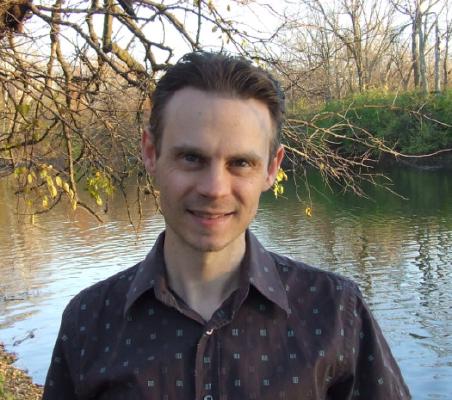
Brentyn J. Ramm is an independent philosopher. His research focuses on using first-person experimental methods to investigate conscious experience (experimental phenomenology). He was a Humboldt postdoctoral fellow in the Department of Psychology and Psychotherapy at Witten/Herdecke University in Germany. He completed his PhD in philosophy at the Australian National University in 2016. His honours in philosophy was at the University of Queensland. Before this he completed a PhD in cognitive psychology at the University of Queensland in 2006. His first book is titled: Seeing Your True Nature: The First-Person Science of Consciousness and the Headless Way.
Website: https://sites.google.com/view/brentyn-ramm
Brentyn J. Ramm on Daily Philosophy:
Notes
-
Sartre, Jean-Paul. The Transcendence of the Ego: An Existentialist Theory of Consciousness. Translated by Robert Kirkpatrick and Forrest Williams. New York: Hill and Wang, 1991/1957. ↩︎
-
Harding, Douglas, E. The Science of the 1^st^-Person. Its Principles, Practice and Potential. London: Shollond Trust, 1997/2001, p. 60-61. ↩︎
-
Harding, Douglas. E. On Having No Head: Zen and the Rediscovery of the Obvious. London: Shollond Trust, 1986/2000, p. 50. ↩︎
-
Derrida, Jacques, and Anne Dufourmantelle. Of Hospitality. Translated by Rachel Bowlby. Stanford: Stanford University Press, 2000. ↩︎