Solvitur Ambulando
The Philosophy That Was Meant to Be Walked
For most of its history, philosophy was something you did on foot. Then thinking moved indoors, and we lost something worth walking back to.
Zeno of Elea built a set of arguments to prove that motion is impossible. The arrow in flight, he said, occupies at every instant a space equal to itself, and whatever occupies a space equal to itself is at rest; so the flying arrow does not move. Achilles can never overtake the tortoise, because he must first reach the point the tortoise has left, by which time it has crawled a little further on, and so on without end. The logic is tight. It is also maddening, because you can watch the arrow land and watch Achilles win the race.
The story goes that when someone laid these paradoxes out, Diogenes the Cynic offered no rebuttal. He stood up and walked across the room. As a formal refutation it proves nothing; walking does not untangle Zeno’s logic. As a philosophical gesture it is close to perfect. Diogenes answered abstraction with a footfall. He refused to let a clever argument float so far above the ground that it lost sight of the world it was meant to describe. A step instead of a syllogism.

That gesture left us a phrase that has echoed down the centuries: solvitur ambulando, “it is solved by walking.” It has come to carry the idea that some problems are not answered by thinking harder but by moving, by returning to lived reality, by letting the body weigh in. Not every question yields to it. But some questions were never really problems to be solved in the first place. They were things to be lived with, and walking is one of the oldest ways we have of living with them.
Where the feet went missing
To feel the force of Diogenes standing up, you have to remember what philosophy once was. The word itself, philosophia, means the love of wisdom, and for the ancients that love was not a subject you studied but a life you led.
This is the case the French philosopher Pierre Hadot spent his career making. Reading the Stoics, the Epicureans, the Cynics and the rest, Hadot argued that ancient philosophy was first of all a way of life: a set of what he called spiritual exercises, disciplines of attention, self-examination and transformation meant to change the person who undertook them. The theories mattered, but they were in service of how one lived. Philosophy was closer to medicine for the soul than to a filing system for propositions.
Somewhere along the way, that changed. Philosophy got chairs, lecture halls and journals. It moved indoors and climbed into abstraction, and in the climbing it left the feet behind. We kept the arguments and mislaid the life. Tell someone today that you are interested in philosophy and they picture a seminar room, a reading list, a set of positions to defend. They rarely picture a person walking a wet lane at dusk, turning a question over in the body. And yet, for most of its history, that is what philosophy actually looked like.
A history written on foot
The evidence is everywhere, once you go looking for it. Aristotle taught while walking the covered walkways of his school in Athens, and his followers became known as the Peripatetics, the walkers, because that was how the thinking got done: on the move, in company, one step feeding the next thought. Two thousand years later Jean-Jacques Rousseau confessed that his mind only worked in motion. “I can only meditate when I am walking,” he wrote; the moment he stopped, so did his thinking.
Immanuel Kant, who overturned our understanding of knowledge itself, did it from inside a life of almost monastic routine. Each afternoon he left his house in Königsberg at the same hour and walked the same path, so reliably that his neighbours were said to set their clocks by him. The walk was not exploration. It was continuity, a moving ritual that steadied the mind and let it run deep. Kant is a useful corrective to a modern superstition, the notion that a free mind needs a free and stimulating life. His settled outer life was the riverbank that let the inner current run.
Søren Kierkegaard walked for a different reason: to survive himself. Brilliant and melancholic, he wrote about anxiety and despair with a rawness that still unsettles, and he treated walking as therapy long before the word existed. “I have walked myself into my best thoughts,” he told his niece in a letter, and knew of no burden so heavy that walking could not ease it. Where Kant walked for order, Kierkegaard walked for mercy.
Then there is Friedrich Nietzsche, who did not saunter but strode, for hours, often uphill, along the lakes and mountains around Sils-Maria. “Only thoughts that come by walking have any value,” he insisted, and he meant it as a whole philosophy of the body: thinking that withers under artificial light and the weight of books, set against thinking that comes alive outdoors, in motion.
What is easy to forget, and worth remembering, is that Nietzsche was a sick man for most of his adult life, laid low by migraines and nausea for days at a time. The walks were not the overflow of easy vitality. They were carved out of the gaps between suffering. The philosophy of strength and life-affirmation he is famous for was written by someone with every reason to affirm nothing, choosing life on foot, again and again.
Across the Atlantic, Henry David Thoreau made walking a moral act. In his essay Walking he wrote of sauntering as something close to pilgrimage, tracing the word, half in earnest, to those who once roamed the country under the pretence of going à la Sainte Terre, to the Holy Land. To walk well, for Thoreau, was to treat the ordinary earth as sacred ground. “In wildness is the preservation of the world,” he declared, and he chose his word with care: not wilderness, a place you must travel to, but wildness, a quality alive in you and in the scrap of green at the end of your road.
Different temperaments, different centuries, different landscapes. But the through-line is unmistakable. For these thinkers the walking was not a break from the work. The walking was the work.
What the body knows
Why should this be so? What does moving actually do for thinking?
Part of the answer is almost physical. Walking sets a pace. It is slow enough that a thought has room to unfold and rhythmic enough that the restless, grasping part of the mind settles into the background. You are not staring at a screen. You are not filling the air with explanations or racing to be productive. You are paying attention to the world, to your breath, to the quiet questions that rise like mist off the road. Attention, which modern life shreds into a hundred fragments, gets quietly handed back to you.
But there is a deeper point, and it returns us to Diogenes. Some knowing is not intellectual at all. It is sensory, rhythmic, bodily; it arrives only when you step into motion. When you walk with a real question, you stop demanding that it resolve. You carry it like a stone in your pocket and let it rub against your movements. Some days it softens. Some days it grows heavier. But it becomes more real, less an abstraction to be disposed of and more a thing you are genuinely living with. That is what solvitur ambulando means at its truest. Not that walking solves the problem, but that walking transforms it. It changes how you carry the weight. It offers the body as a partner in thought.
Returning to what matters
I did not arrive at any of this from a library. I came to it because I had to.
For most of my life, movement meant something fiercer than walking. I was a martial artist, a lifelong practitioner and teacher, and I built my whole world around the art of embodied presence. Then came the diagnoses: the accumulated damage of decades of full-contact training, and beneath it a chronic illness that punishes effort rather than rewarding it. I was told, plainly, that continuing to do what I loved would cost me my future. The body I had made my life out of was the thing giving way, and for a while I lost more than a profession. I lost a way of being.
And then, almost absurdly, I began to walk. Not as a training regime, not as one more thing to optimise, but because it was the only movement left that did not ask me to prove anything. With this kind of illness there is no pushing through; effort is taxed, not rewarded. So I could not march. I could only amble, pause, and turn back when my body said turn back, along the coastlines and misty woodlands and wet pavements of the Isle of Man.
At first it was simply about surviving the day. But over time, in the rhythm of my steps, something returned: a pulse of being that did not depend on performance or toughness or the old version of myself. And philosophy came with me, no longer as theory but as a companion. I walked with Kierkegaard’s mercy and Nietzsche’s stride and Diogenes' plain refusal, and I understood them in a way I never had sitting still.
Philosophy on foot
Here, then, is what we lost when thinking moved indoors, and what is still, in principle, recoverable. Philosophy as a way of life was never the property of professionals. It asked for no equipment, no fees, no dogma and no particular cleverness, only that a person take their own questions seriously enough to live with them rather than rush to dispose of them.
Of all the forms that practice has taken, walking may be the most ordinary and the least exclusive. It requires no belief and confers no expertise. It is the oldest way human beings have found of thinking with the whole of themselves, rather than with the head alone.
The paradoxes will not dissolve because someone stood up and crossed the room; Zeno’s logic is still waiting when the walker sits back down. But something has been remembered that the logic cannot touch. That a life is not only to be argued about, but lived. That understanding, when it comes at all, tends to arrive on soft feet, at a slower pace than argument and by a different road. Diogenes knew it when he answered a contradiction with a footfall. Philosophy has always known it. It only forgot, for a while, to walk.
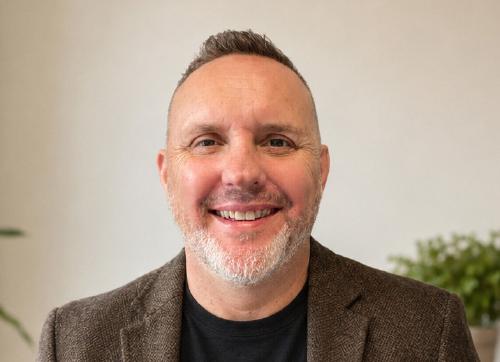
Dr Rodney King is a philosophical practitioner, ecopsychologist and author based on the Isle of Man. His work explores how we can flourish and remain deeply human amid the pressures of modern life, drawing together philosophy as a way of life, embodied awareness and our relationship with the natural world. He holds a PhD in Mindful-Embodied Leadership and is undertaking a second PhD in Applied Philosophy at Rhodes University, researching philosophical practice and the contemporary crisis of meaning.
He is the author of Being Human: On the Courage to Simply Be and writes over at Search for Sophia on Substack, where he explores lived philosophy, attention and the pressures of a culture preoccupied with productivity and self-optimisation. Alongside his writing, he offers philosophy-inspired coaching and counselling to individuals and leaders. Further information about his work is available at coachrodneyking.com.
Rodney King on Daily Philosophy: