Fools, Heretics and a Geriatric Home in Weston-super-Mare
Review of Kathleen Stock’s Do Not Go Gentle (2026)
He will live badly who knows not how to die well. – Seneca
In the United Kingdom there has recently been vigorous debates — sometimes with outrage; sometimes with tears — concerning proposed legislation instituting assisted dying. The debate is soon to be resurrected (autumn 2026); hence, the philosopher Kathleen Stock’s latest work arguing against the legislation is highly relevant. Readers, though, may well wonder at the relevance of this paper’s title; so, let me explain before I turn directly to Do Not Go Gentle.
The title’s relevance
First, mention of Weston-super-Mare derives from the quip attributed to the novelist Kingsley Amis:
No pleasure is worth giving up for the sake of two more years in a geriatric home in Weston-super-Mare.
Ignoring whether or not earlier pleasures would have been involved, those who oppose assisted dying see value, direct or indirect, in additional years of life, even if in a geriatric nursing home and, indeed, even if those years belong to people in dire biological decline or despairing psychological states, wanting assistance to die. Let us keep that before our minds; after all, certain opposers of assisted dying are convinced that there is value for those individuals in continuing with such miserable living. Certain other opposers, no doubt, acknowledge no direct value in that way of living for the individuals concerned, but the disvalue for those individuals is easily outweighed by the overall value for society and others in maintaining the illegality of assisted dying.
Secondly, how do fools and heretics enter? They derive from an observation by Ludwig Wittgenstein (On Certainty 611):
Where two principles really do meet which cannot be reconciled with one another, then each man declares the other a fool and a heretic.
That has obvious relevance to debates both within religion and between the religious and the non-religious — and also to fundamental political debates about how society should be structured: for example, on free-market capitalist lines or on communist lines? In certain cases, there seems to be no meeting of minds, no scope for an agreed resolution. Such irreconcilable differences can also be seen when assessing some of the most determined positions in the assisted dying debates, be they for or against. I hasten to add that many individuals in the debates would hesitate on either side, recognizing that there is no easy way of establishing the pros and cons such that one side deserves clear victory.

Although Wittgenstein offered the accolade of some people being deemed both fool and heretic, a distinction could be made. Individuals in conflict may view others as ‘fools’ (perhaps in a friendly way) for failing to grasp the consequences of their position. On the one hand, certain determined opposers of the assisted dying legislation argue in effect that the proponents are fools for not seeing the abuses to which that legislation would give rise. On the other hand, supporters of the legislation may feel that the legislation’s opponents are fools for failing to realise that any abuses can be minimised and are outweighed by the benefits to those who want and need assistance to die. Here, both sides can have similar values; the dispute is a factual one over, roughly speaking, the weighing of likely outcomes.
The use of the term ‘fool’ could remind us of St Anselm’s ontological argument where the fool is the one who cannot grasp that God must exist; he fails to see the alleged logical contradiction in his atheistic belief. That is an alleged incompetence in logical reasoning; here, though, the fools in the assisted dying debate are deemed such, not because of an incompetence in logic, but in a failure properly to assess empirical evidence regarding benefits and risks. Of course, it is possible that if the legislation goes ahead, then the dispute could be settled — at least for some — for example, have the predicted abuses arisen? That possibility of settlement contrasts with cases more aptly deemed as giving rise to disputants making ‘heretic’ charges against each other. Let us see.
Although ‘heretic’ has a natural home regarding fundamental religious beliefs, it can apply to fundamental secular disagreements over values; a political example has already been given. Opponents of assisted dying often hold to the fundamental value of human life. To challenge that value is heresy — for human life is the bedrock of values. And, one way or another, many hold fast to that view. Proponents of assisted dying, though, can also view certain opponents as engaged in heresy: the opponents lack proper regard for fundamental values, acknowledged by many, relating to human autonomy and quality of life.
Arguments and claims made in the assisted dying debates, which can lead to attributions of ‘fools’ and/or ‘heretics’ as understood above, arise in Stock’s work — to which I now expressly turn.
Kathleen Stock’s Do Not Go Gentle
Within academic philosophy, Kathleen Stock is well-known and mostly well-respected. Within the wider world, she possesses some notoriety, having rightly challenged certain transgender self-identification beliefs. That challenge generated protests and abuse so great that she resigned from the University of Sussex. That challenge is why I reluctantly inserted ‘mostly’ above.
Stock’s latest work will annoy supporters of the UK’s attempts to legalise consensual assisted dying. Who knows whether it will generate abuse akin to the abuse she suffered regarding transgender matters?
Stock’s preferred term ‘assisted death’ highlights the legislative aim in view; the term also usefully covers voluntary euthanasia — when others kill consenting individuals in the interests of those consenting individuals. The terminology could indeed be ‘assisted killing of oneself when requested’, though certain terms in deployment can generate knee-jerk objections because of an emotional charge. ‘Killing’, as it typically arises in news reports, is unwanted by victims and often creates a feeling of repulsion in audiences.
As an aside, I should point out that some glorify the death of others, many others: in recent months, witness the smug satisfaction of the US and Israeli administrations at the killing of thousands of Iranians and Palestinians — in the case of the US, with stirring war-film music playing over the scenes, as if a great and glorious game. I mention the US and Israel rather than horrors imposed by leaderships in Iran, Myanmar or Sudan — and elsewhere — because, of course, the UK is heavily involved in various ways in supporting both the US and Israel.
Returning to the ‘assisted death’ terminology, we could speak of ‘assisted suicide’, but suicide also has negative connotations for many people — and certainly historically so. To my mind, ‘suicide’ sounds legal, official and formal, rather than personal and sometimes even to be admired. I prefer ‘by my own hand’; assisted dying would then, I guess, be ‘hand assisting hand when requested’.
◊ ◊ ◊
Stock’s opposition to the proposed assisted dying legislation is an opposition to ‘formal structures dedicated to helping consenting people to die, aided by clinicians and embedded within health systems’. The opposition is on moral and ethical grounds, not religious. Not all assisted deaths receive her opposition; she approves of certain managed withdrawals of treatment, recognising that they hasten death often intentionally so. Something acceptable at an individual level, though, does not justify embedding it as a legal right across the board; happily, assisted death supporters have no need to rely on that unjustified move to ground their support.
Readers, beware! Stock’s book is worth much reflection: it offers historical context, international legislative differences and philosophical considerations from, for example, Aristotle to Hume to Kant — but… It is one-sided and pretty polemical. Some supporters of assisted death, notes Stock, are from ‘gilded worlds’ of celebrity, power or wealth; UK assisted death availability would be a convenient good for them in case ever needed, avoiding sombre Swiss trippings. She is right, but, no doubt, other ‘gildeds’ oppose the legislation. Either way, arguments, for or against the legislation, merit no special weight just because endorsed by media personalities, footballers or even by critical race theorists or philosophers (humble or no). One should assess arguments, evidence and experience, not the arguers; messages, not messengers.
Assisted death supporters deploy emotionally charged tales of undignified and painful dying — ‘sentiment laid on with a trowel’ says Stock — yet she is ever ready with her own trowel. She tells of a Boston USA case to illustrate extreme pressure: a woman gave ‘unrelenting verbal, physical and psychological abuse’ to her boyfriend leading to his suicidal demise. Most people with terminal diagnoses, Stock emphasises, are elderly, vulnerable and highly susceptible to abuse. Some are likely to be bullied by family members into opting for assisted death, hence ensuring that the family avoids financial loss through the costs of social care.
Emotional appeals can open eyes, and in life’s grubby world, we have competing anguishing cases, ‘on the one hand’ but ‘on the other’. Let us resist thinking that there must be clear answers even though paradoxically answers clearly are required. Laws have to be made — or not — and legalised assisted death services with imperfections may be better than no services at all. Let’s see why Stock disagrees.
Life needs more than life — heretical?
Freedom (autonomy, ‘my choice’) and mercy (compassion, empathy) are two sets of fundamental values favouring legalised assisted death, but they are in tension: witness legislative differences between Australia, Benelux, Canada et al. Some require terminal illness diagnoses; some do not. Some refer to unbearable suffering; some, not. And so forth.
Yes, individual freedom rightly appeals — within limits — and, yes, mercy, compassion, empathy are desirable virtues. Assisted death legislation, though, is not designed solely to permit certain assisted demises, but, as Stock rightly points out, to impose duties on the state or related authorities to assist.
Why not, though, make such assistance available, be the legislation grounded in mercy and compassion or in respect for individual freedom and autonomy?
Well, Stock has it in for focus on individual freedom; it values an unwelcomed individualism, as if people are independent of society, self-interested: ‘isolated monads’ — an expression from Marx (Karl). That is a curious objection by Stock because she maintains that people will increasingly elect for assisted death to avoid being burdens — hardly isolated individualism. And, of course, assisted death supporters are exercised by the plight of those others whose free choice for assistance is denied.
As for mercy, for compassion, Stock objects that it treats lives with considerable suffering, illness or paralysis, as not worth living; it makes negative value judgements about others. One quick reply is that some assisted death supporters are sufferers themselves — in Stock’s terminology, ‘making negative value judgements’, but clearly not about others. Further, my disvaluing a life of considerable suffering for myself is not disvaluing others who find living worthwhile even with that suffering. Stock, by the way, readily expresses certain negative value judgements about others — about those favouring their own assisted death. Self-interestedly, they are — tut, tut — seeking to flee from life, when the going gets tough.
Despite Stock’s criticisms, freedom and mercy are surely acceptable values for grounding assisted death legislation, albeit qualified with conditions which, as a matter of fact, turn out to be ideal neither for freedom-lovers nor for the mercy-motivated, but sufficiently tolerable for both. The mercy-motivated put up with conditions excessively widening eligibility (including, say, terminal illness, not just unbearable suffering), whereas freedom-lovers make do with conditions too restrictive. Both may feel uneasy at arbitrary lines drawn, for instance, illnesses deemed as terminal only if the remaining life-span is likely to be six months maximum.
◊ ◊ ◊
With assisted death legislation in place, there is scope for sloping, slipping and sliding, into looser eligibility. The mercy-motivated fear the sliding; freedom-lovers welcome the slide. Assisted deaths in Canada, Switzerland and elsewhere have increased over the years. Stock presents that as bad, whereas it could be good, people finally being helped not to cling to undesirable and undesired living.
Putting to one side the likelihoods and extent of slidings — and that is where the debates can be viewed as between ‘fools’ for not having clear sight of outcomes — the fundamental argument here arises between people with conflicting values: how should freedom and autonomy hold against mercy and compassion — and how should both stand regarding Stock’s stance on the fundamental value of (human) life? Is the heresy that of maintaining ‘life is valuable’ however much the loss of autonomy, of dignity, and however much the suffering and distress? Or is it heretical to dare to challenge the value of life and living however bad it is?
The to-ing and fro-ing above can be seen as Stock charging proponents of assisted death with the heresy of going against the fundamental value that, as said, (human) life is a bedrock of value; they seek to undermine that value by tempting us with their siren voices of how people should be free to choose and how we should show mercy — but, insists Stock (or so it seems), those values must not trump respect for life qua life.
Fools disregard…?
A set of Stock’s further objections includes ones of abuse and of the dangers of medicalisation. This is where she may be implying that proponents of the legislation are fools for not seeing likely and undesirable outcomes.
Regarding abuse, Stock (as warned, one-sidedly so) highlights death requests that lack genuine consent. I offer an example to set the scene: Sealed Envelope. Suppose we are suffering from a terminal painful and immobilising condition and contemplating assisted death. Some friends or relatives (and, yes, ’tis logically possible that some relatives are also friends) discover this. Their views are expressed in this sealed envelope. Should we open?
The individualistic, narcissitic, dogmatic, may not even care what others think, but many people would feel it discourteous to ignore friends and relatives — and may want to know their views. After all, we should take into account how our decisions affect others, though that does not mean that the interests of others must always trump ours.
Suppose the letter vividly describes the burden we are, care costs eating into inheritances, NHS resources being wasted — and how undignified we incontinently now appear before the world. If we succumb and opt for death, Stock would, it seems, condemn the friends and relatives for pressurising us; she would doubt whether we genuinely consented.
Suppose, though, that the letter tells of the great loss our friends and relatives would feel. They plead with us to value life — ‘be strong’ — and realise how much we are loved. Reluctantly, we live on. Here, Stock, it seems, would support the outcome even though it also results from pressure.
Encouragers of assisted deaths, Stock assumes, would usually be exerting pressure and acting in their own self-interest. I am tempted to agree with that implied low opinion of human nature, but we need evidence showing that safeguards against pressurised deaths would typically fail and that predicted harmful pressurising would outweigh the legislation’s benefits for others. Of course, questions should also be asked about the criteria for assessing whether pressure has been applied — and indeed quite why decisions that result from such pressure are to be rejected yet other decisions are not.
Heightening fears of abuse, Stock turns to unscrupulous doctors such as Harold Shipman who was found guilty of murdering hundreds of trusting, vulnerable and elderly patients throughout the 1970s to 1990s. He, of course, operated when no assisted death legislation was in place. With such legislation, asserts Stock, there will be more Shipmans. Who knows? Furthermore and once again, who can tell whether those dangers outweigh the benefits to those seeking assistance to die and, for example, to their families distressed at the suffering?
Most generally, institutions, Stock reminds us, give scope for abuse. Indeed, there are corruptions, mistakes, cover-ups, in many areas: government, policing, health; welfare, maternity, adoption. We should not therefore abandon those services. Perhaps death services are deemed fundamentally different given death’s distinctive finality. Wrongful assisted deaths cannot be rectified — a reason for capital punishment being dropped.
True enough, with assisted deaths, subsequently discovered errors over consent cannot lead to deaths being undone, but long wrongful imprisonments also cannot be undone. Errors in adoption assessments leading to a child’s death cannot be undone; yet we do not conclude that all adoption services should be banned. Even more basically, sexual engagements can give rise to children, a few of whom sadly will be mistreated, abused and worse. Should that lead us to conclude that, at best, reproductive activities should be barred or perhaps limited to a ‘gilded’ few?
Thinking further afield, corporations provide much that is valuable, yet courtesy of semi-addictive ingredients, also much that is injurious to human well-being. Think of the promotion of unhealthy foods, drinks — of gambling and, indeed, of desires to acquire more. Through powerful marketing, corporations effectively pressurise us into a range of consumptions, causing some early deaths or ruined lives. Overall, though, we frequently trade dangers for benefits: so too does assisted death legislation. Supporters maximise benefits, minimise dangers. Stock does the opposite.
With rhetorical flourish, Stock tells us that our institutions ‘should not try to compensate for every cruel twist of fate in life by offering an early death as a good solution; not where doing so will make many other people’s lives ultimately worse’. There is, though, no reason to think the institutions have every twist of fate in mind — and it is not clear why Stock is so sure that the cruel twists of fate that assisted death facilities are designed to address will make things ultimately worse for others.
◊ ◊ ◊
Turning to the worry over the medicalisation of assisted death, Stock makes much of the fact that doctors have no special skill in advising when best to end life. That is true, but they can explain the likely progressions of illnesses, possible treatments and degrees of effectiveness. Consider: doctors have no special skill in advising how many children women should have, but they still have useful roles in outlining factors regarding conceiving, dangers of pregnancy and so forth.
Stock’s basic objection to medicalisation is that the NHS was founded to improve human health; providing assisted death undermines that. (Are ‘do not resuscitate’ orders also deemed undermining?) That basic objection displays a questionable understanding of ‘health’ — please see later — but if the NHS’s rationale poses a conflict here, then let a separate institution run death services. Arguably, NHS provisions these days, though, already stretch the concept of ‘human health’: consider IVF treatments, puberty blockers and prolonging deeply comatose lives that lack recovery prospects. Assuming we have a valuable institution, as with the NHS, some stretches (if stretches they be), no doubt, are good; some bad.
With assisted death on the NHS menu, some people’s mental health would be improved, comforted by the ‘just in case needed’ thought. True, certain groups fear the ‘assisted death’ extension to the NHS menu, but instead of encouraging those fears, ’tis far better to spread the word of how such fears are largely ungrounded and outweighed by benefits.
Assisted death provision could generate other alleged adverse outcomes, for instance, reducing palliative care resources; but it need not. The provision could be partnered with — even stimulating — greater resources. Let us acknowledge, though: some people, having had enough of biological decline, may prefer assisted death to care. They may warm to Amis’s musing mentioned:
No pleasure is worth giving up for the sake of two more years in a geriatric home in Weston-super-Mare.
Yes, as Stock notes — though probably exaggerates — some others, suffering from poverty, despair and hopelessness in their everyday lives, could be driven to try for assisted death, if the law allows. The answer is to relieve the poverty, not to use that the possible use of assisted death facilities to bar the legalisation.
At heart: heresy
Stock offers a fundamental objection to typical legalisations of assisted death: namely, the effects on society’s attitude to human life. She is rightly appalled at certain journalists, such as Matthew Parris writing in The Times, London, who welcome a future, where once we are elderly with crippling infirmities, we are coaxed into assisted death as best for us — even one day, as our social duty to help reduce financial demands on society. Parris et al trumpet the socio-economic advantages that would flow.
Again, the answer for preventing that unwelcomed outcome need not be to ban beneficial death provision, but to fight Parrisian support for a depressing dehumanisation of many people, seeing them as net economic burdens. We should combat the ‘narrative’ (to use a popular term) of people as units to be assessed for their economic value and disvalue rather than using the fear of it to justify rejection of assisted death proposals.
◊ ◊ ◊
Summing up thus far: most people value freedom, mercy, compassion and so on — to some degree. It is odd, then, to oppose those values when used in support of assisted death legislation — as if that use is heretical. The possibilities of abuse are real but ground no knock-down objections; we live with many beneficial laws despite abusive risks. As for medicalisation and society’s disvaluing human life — well, I turn to Seneca’s aphorism heading this paper:
He will live badly who knows not how to die well.
An understanding of life — an enhanced understanding — attends to how life ends. The nature of that ending is a factor in how good or flourishing life has been. Living well includes, paradoxically, dying well. Although there may be practical and pragmatic reasons for excluding death services from the NHS, those services are not contrary to the promotion of healthy lives. Healthy living comes to an end and how it ends has significant bearing on the health of that living.
Here is a related area where the value of enhancing a basic idea is easily recognised.
Utilitarians write of promoting happiness; the highly influential Jeremy Bentham, in the early nineteenth century, understood that in terms of pleasure and absence of pain. John Stuart Mill enhanced Bentham’s understanding, distinguishing between higher and lower pleasures, arguing: ’tis better to be a dissatisfied Socrates than a satisfied pig. There is more to a happy life than pleasurable sensations. As Plato and Aristotle would insist, human flourishing involves friendships, courage, integrity, aesthetic appreciation and so forth. Those elements are not reducible to quantities of pleasure.
Similarly, a greater number of years of our being alive, maximising the quantity of life, does not thereby make lives better; it may make them worse and may even do so by adversely affecting how previous years went or how they now are to be assessed. For some of us, keeping the dying going for as long as (naturally?) possible is neither living well nor dying well. The end needs facing. The response ‘Do it yourself’ is, though, no easy answer even for those physically able to die ‘by their own hand’. Courage, support and assistance — additional hands — may yet be needed.
Many are wary of Friedrich Nietzsche — he can go over the top — but here is some worthwhile musing (from his Twilight of the Idols):
To die proudly when it is no longer possible to live proudly. Death freely chosen, death at the right time, brightly and cheerfully accomplished amid children and witnesses: then a real farewell is still possible, as the one who is taking leave is still there; also a real estimate of what one has achieved and what one has wished, drawing the sum of one's life…
That offers a positive spin and some people, given the chance, would prefer to end life in that way even if needing to be with assistance. Others prefer Dylan Thomas’s ‘Do not go gentle’ and may proudly display that preference. Assisted death legislation allows for both preferences. Stock does not. Well, more accurately, Stock does a little.
Stock, it appears, favours a world that allows certain death assistances but only for those (‘gilded’?) with the wherewithal for travel abroad, Zurich and Dignitas bound, or with compassionate doctors at home prepared to risk illegality. Indeed, Lord Sumption, one-time Supreme Court Justice, was also one-time opposer of assisted death legislation, recommending occasional law-breaking. I wonder how wise that was.
Stock writes, apparently warmly, of Switzerland’s 1937 law’s Article 115, legalising assisting suicides if not selfishly motivated. That enabled individual private agreements, contrasting with today’s physician-assisted suicides satisfying Dignitas’s conditions. Stock’s preferred non-institutionalised, non-medicalised approach for assisted death, though, surely risks many of, even a greater number of, the abuses that she keenly casts at institutionalised approaches. Perhaps, though, society would not slide into disvaluing human life if, in practice, only a small privileged group — dare I say, a ‘gilded’ circle — with appropriate contacts could make private arrangements for assisted death.
Happy Ending-Life Provisions (HELP)
Stock concludes: institutionalising assisted death undermines the precious attitude towards ‘life’s value and what we owe one to another’. That is why, using Wittgenstein’s terminology, supporters of assisted death legislation are, for Stock, heretics. With rhetorical revision of Stock’s understanding of her ‘precious attitude’, I reply that, contrary to Stock’s position,
any precious attitude towards life’s value ought not to demand prolonging life regardless and against people’s wishes; any precious attitude towards what we owe to one another ought to embrace, not disparage, values of freedom and mercy supportive of assisting death.
Here, I wield my own trowel of persuasive sentiment. I propose death services as HELP: Happy Ending-Life Provisions.
◊ ◊ ◊
As a coda, allow me to highlight the incongruity between how morally outraged some people are at the very idea of assisting individuals to die who want to die and how casual some of those outraged are (I am not including Stock) at accepting war and poverty — that is, the killing or letting die millions who neither want to die nor deserve to die.
◊ ◊ ◊
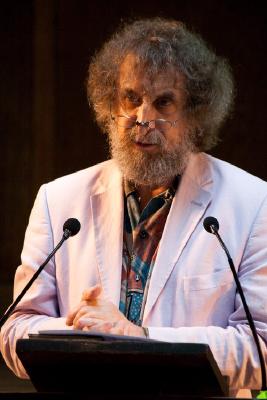
Peter Cave is a popular philosophy writer and speaker. He read philosophy at University College London and King’s College Cambridge. Peter is a Fellow of the Royal Society of Arts, Honorary Member of Population Matters, former member of the Council of the Royal Institute of Philosophy and Chair of Humanist Philosophers - and is a Patron of Humanists UK. He has scripted and presented BBC radio philosophy programmes and often takes part in public debates on religion, ethics and socio-political matters. His philosophy books include This Sentence Is False: An Introduction to Philosophical Paradoxes (2009), and three Beginner’s Guides: to Humanism, Philosophy and Ethics. More recent works are The Big Think Book: Discover Philosophy Through 99 Perplexing Problems (2015), The Myths We Live By: A Contrarian’s Guide to Democracy, Free Speech and Other Liberal Fictions (2019), and How to Think Like a Philosopher (2023).
Find out more about Peter Cave at: www.philosophycave.com.
Peter Cave on Daily Philosophy: