Nussbaum Fighting With Vietnamese Uncles on Keeping Ornamental Birds
In Vietnam, many families and businesses keep a songbird. Housed in ornate bamboo cages, these birds are the centerpieces of a Vietnamese tradition known as chơi chim cảnh (‘playing’ ornamental birds). The birds are often meticulously cared for, fed premium diets of insects and fruit, bathed daily, and protected from the harsh realities of urban predators. If humans provide food, care, and most importantly, safety, does it justify the stripping of a creature’s fundamental autonomy?
Nussbaum proposes the Capabilities Approach. This theory focuses on what one is able to do and be? She argues that every creature has a set of species-specific functions that are essential for it to flourish, to live a life that is worthy of its dignity. While Nussbaum developed this list originally for humans, she extends it to animals, including capabilities such as: “life, health, bodily integrity, affiliation, and practical reason.” (Nussbaum 2006, 2) The tradition excels at providing life. The owners take immense pride in the glossy feathers and longevity of their birds. However, the cage systematically annihilates other crucial capabilities.

Most obviously, caged songbirds are not able to fly, either due to the cage or even due to bodily mutilation. Nussbaum agrees that “even a comfortable immobility would be wrong.” (p.3) Furthermore, birds are often kept in solitary confinement. While owners sometimes bring cages together for ‘singing contests,’ the birds are separated by bars, unable to touch or interact physically. They are forced into a dependency on a human owner who cannot speak their language.
Culturally, keeping birds is seen as a cultivation of the human soul. It teaches patience, gentleness, and an appreciation for “nature’s voice.” It is arguably a form of love. The owner who wakes up at 5 a.m. to prepare fresh food for his bird does not view himself as a jailer, but as a guardian. Nussbaum recognizes the complexity of culture and traditions. However, although the person may think that they are caring, or even protecting the bird, she said that “sympathy…can all too easily be corrupted by our interest in protecting the comforts of a way of life that includes the use of other animals as objects for our own gain and pleasure.” (p.1) The “love” exhibited in this context is possessive. It values the bird as an object, a living music box rather than as a subject with its own life. The beauty of the bird and its songs is appropriated for human enjoyment, creating a power imbalance that the Capabilities Approach identifies as unjust.
An anti-Nussbaum may ask: Is Life not the prerequisite for all other capabilities? If a bird is dead, it has no agency, no affiliation, no bodily integrity, no nothing. Therefore, does the “cage” not maximize the most foundational capability of all? If we humans are forced to choose between a short, violent life of “freedom” where the Life capability is cut short and a long, healthy life of confinement where Life and Health are maximized, might the latter option actually secure more total capability for the individual creature?
Nussbaum would argue that a long life spent in a state of deprivation is not a life in the dignified sense, it is only biological persistence. Just as we would not accept imprisoning a human child in a sterile room for 80 years to ensure they never catch a cold or suffer an accident, we cannot justify the permanent caging of a bird simply to extend its life. The goal of living is not just being, but doing and being in a way characteristic of the species. For her, a bird that cannot fly is living a “distorted and impoverished existence” (p.3), and no amount of safety can compensate for the erasure of its defining nature.
In contrast, an Utilitarian uncle would argue that a prized songbird in Vietnam lives a life of luxury compared to its wild counterparts. While in the wild a bird faces the constant threat of starvation, disease, and predation, inside a cage, it is shielded from these harms.
Nussbaum would counter by first mentioning that she doesn’t romanticize nature, stating that “nature is not particularly ethical or good.” (p.5) She would realize that this argument creates a false dichotomy: the only options are “freedom with death” or “captivity with safety.” Nussbaum urges us to look for a third way, a form of supervising that respects dignity. But more importantly, she argues that safety cannot be purchased at the total cost of the “characteristic functioning” (p.5) of the species. A human kept in a sterile room, fed via tube, and protected from all germs and accidents would be safe, but we would consider this a violation of human rights because it eliminates freedom. Similarly, a bird that cannot fly has lost its “bird-ness.”
Nussbaum would also say that the “singing” itself requires deeper consideration. In the wild, bird singing is functional, it claims territory or attracts mates. In a cage, the song is often a result of stress, sexual frustration of unanswered mating calls or a response to a rival bird placed nearby during ‘singing contests.’ The human owner enjoys the melody, but the meaning of the song for the bird is one of unfulfilled purposes. We are enjoying the sound of their loneliness and longing.
Is it impossible, then, to keep birds ethically? Nussbaum’s theory does not necessarily demand stopping all captivity, but it demands an extreme restructuring of the conditions of captivity. The problem with the traditional Vietnamese songbird cage is that it is designed for human convenience of portability and visibility, not for the bird’s flourishing. But what about a large aviary? If a bird can fly short distances, forage for hidden food, and interact with a mate, it may retain a significant amount of its capabilities.
◊ ◊ ◊
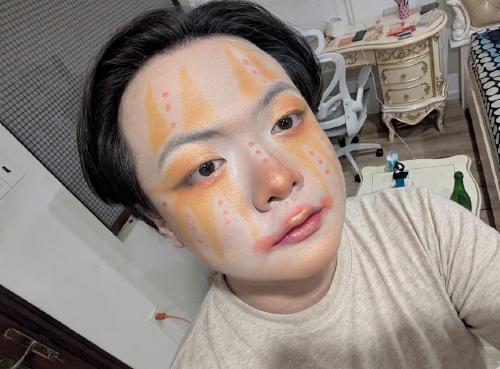
Nguyen Minh Tri (Tonee) is a drag artist and scholar working in Vietnam. They are currently the Social Studies Major Representative at Fulbright University Vietnam. They also make art and write prose that complicates or simplifies the body as a medium and the body as the actor. They also write about the mundane things in life that interest them, like the bugs of life, and their tragic love life.
Instagram: instagram.com/tonywith2e
Nguyen Minh Tri (Tonee) on Daily Philosophy:
References
Nussbaum, Martha C. “The Moral Status of Animals.” Arcus Foundation. Accessed November 27, 2025. Online here.