Who Controls Truth in a Post-Truth Era?
After the Hunt and the Media Politics of Legitimacy
Public discourse in the post-truth era is shifting from “what happened?” to “who possesses the authority to narrate what happened?” Truth no longer flows solely from evidence; it moves through institutions, media infrastructures, and digital platforms as a sociological process. Luca Guadagnino’s After the Hunt renders this shift visible through a sexual misconduct allegation at Yale University.
The film begins when Maggie, a graduate student, accuses her professor Hank of sexual assault. Alma Imhoff, Maggie’s advisor and a philosophy professor, informs the administration — at which point a personal complaint transforms into institutional risk management. Testimonies are ambiguous, evidence is inconclusive, and Hank denies the accusation, claiming Maggie weaponized plagiarism allegations into assault charges. The university’s initial impulse is not verification but the protection of protocol and reputation. A private grievance becomes an administrative conflict.

As the investigation unfolds, the controversy spills beyond campus. Hank is dismissed, Maggie goes public through the Yale Daily News, and simultaneously circulates a sensitive newspaper clipping about Alma’s past. From that moment onward, the central tension drifts away from factual guilt and toward narrative power.
At the core lies a struggle not over events, but over whose account is treated as authoritative. Administrative bodies, student journalism, social media dynamics, and academic circles intersect, and reality becomes negotiated across unequal power positions. Universities deploy institutional legitimacy, journalism produces visibility, and digital platforms orchestrate circulation and affective resonance.
Once circulation begins, the dispute ceases to be about the legal nature of the alleged act. The dynamic turns into a contest over how claims to truth are distributed. Media theorist Robert W. McChesney notes that modern communication systems do more than transmit information; they intertwine with political and economic power, reshaping control over public validity.
From that angle, After the Hunt asks a broader question about democratic life today: how is legitimacy produced, routed through infrastructures, and instrumentalized? Who holds truth — survivors, institutions, journalists, or algorithms? The issue expands beyond information control and toward the representational environments that shape public reality.
Walter Lippmann observed that modern publics never access reality directly but through “pseudo-environments” constructed by media institutions. The political question, then, is not merely what is true, but which institutions render certain statements publicly “real,” and by which mechanisms.
Media Ecosystems and the Politics of Mass Communication
Universities have historically functioned as custodians of liberal-democratic reason: verifying information, classifying knowledge, and generating institutional legitimacy. Digital media ecosystems, however, impose new parameters — speed, emotion, and mass visibility.
After the Hunt dramatizes these tensions across competing institutional and media arenas. A campus incident mutates into multiple forms at once: a personal trauma, a legal case, a bureaucratic procedure, a media object, and a political symbol. The film highlights the velocity, instability, and collisions among these domains.
Media power today is measured not only by content but by infrastructures that govern circulation: network speed, algorithmic weighting, and user interaction patterns. One can sketch media history across three rough sociological formations.
- The Broadcast Media Field (roughly 1945–1980) defined the basic frame of mass communication;
- the Cable–Satellite Field (1980–2000) introduced multi-channel flow and 24-hour news cycles, altering rhythm and tempo;
- the Platform Media Field (2000–present) positioned data, algorithms, and engagement metrics as the dominant parameters.
Just as financial restructuring reshaped social rhythms in the 1980s, digital infrastructures reorganized information flow and altered the production conditions of public truth.
Platform logic privileges velocity, visibility, and affect. Shareability becomes a criterion of relevance, often superseding verification. Algorithmic time compresses the interval for reflection, replacing comprehension with exposure, evidence with reaction. Public knowledge becomes tied to what circulates.
Under such conditions, media functions less as a transmitter of events and more as an infrastructural force that determines how public validity is produced. The apparatus precedes the message: images travel before text and target the self directly. Contemporary interfaces push writing to the background and foreground visuality. Mobile screens simulate interior witnessing rather than distant observation.
McLuhan described this perceptual shift as akin to non-linear “reverse perspective” found in Eastern art, situating the viewer inside rather than outside the scene. That sensory reconfiguration sets the stage for what James C. Scott terms the micro-political domain of infrapolitics — the terrain where claims are not simply debated, but distributed across administrative protocols, journalistic news values, and algorithmic systems.
Scott’s concept of legibility also becomes relevant: complex lived experiences must be translated into standardized institutional formats to become actionable. After the Hunt portrays precisely that process. A personal complaint is reformatted into documents, procedures, and compliance frameworks. Journalism reframes it according to newsworthiness and audience resonance. Platforms recast it through metrics and circulation. A single incident fractures into multiple truth regimes, each governed by distinct criteria of validity.
One of the film’s subtle achievements is how it treats truth as an outcome of circulation rather than solely of testimony. Platforms, editorial systems, and institutional procedures form an ecology in which claims acquire weight through movement. Visibility becomes part of credibility, and circulation functions as a form of verification.
The tension at Yale mirrors a broader collapse of temporal order in public communication. Events no longer unfold through stable sequences of investigation, deliberation, and adjudication. Instead, platform time collapses these stages into overlapping streams: commentary appears before reporting, affect precedes analysis, and reputational consequences unfold before institutional findings. After the Hunt renders that scrambled temporality legible through its editing and narrative pacing.
McChesney observes that modern media systems restructure democratic life by reallocating communicative power between the state, the market, and the public. The film’s institutional triangle — university administration, student journalism, and digital platforms — maps onto these broader political assemblages. Administrative bodies operate from within bureaucratic rationality; journalism pursues public interest; platforms amplify attention. None of these domains alone define truth, yet together they orchestrate the conditions under which claims gain traction.
Scott’s infrapolitics concept illuminates how micro-processes of distribution function beneath formal politics. In that terrain, individuals and groups engage in subtle strategies of visibility, concealment, and tactical disclosure. Maggie’s decision to go public through student media, rather than through formal university procedures, exemplifies such a strategy. Alma’s past, resurfacing via digital circulation, demonstrates how archival traces can be weaponized once they enter platform logic.
Legibility, meanwhile, operates through bureaucratic formats. The university cannot process lived experience directly; experience must be encoded into statements, reports, deadlines, and procedural steps. Journalism cannot transmit ambiguity; it translates the dispute into narrative arcs and news frames. Platforms cannot parse context; they sort content by engagement. Each domain produces a different kind of order, and together they partition reality into discrete layers.
After the Hunt situates this stratification within a recognizable political moment. Democratic participation increasingly unfolds through infrastructures of mediation rather than through face-to-face deliberation. Claims to truth are routed through databases, compliance systems, editorial desks, and algorithmic feeds. Authority disperses across institutions that rarely acknowledge one another, yet profoundly shape each other’s outputs.
The film refuses easy resolution because contemporary truth conflicts rarely end in consensus. More often, they culminate in parallel narratives that coexist without reconciliation. The film’s final movements underscore that unresolved plurality. Viewers are left not with certainty, but with an awareness of how competing logics — legal, emotional, administrative, journalistic, algorithmic — produce incompatible yet simultaneous versions of the real.
Rather than moralizing, Guadagnino maps the infrastructures through which public reality is constructed. The sexual misconduct allegation matters, but so does the machinery that filters it. The political question emerging from the film is not simply whether a crime occurred but how truth is made legible, by whom, and for what audiences. The answer is neither comforting nor cynical: truth becomes a distributed function.
Truth as a Distributed Function
After the Hunt is far more than a campus scandal film; it serves as an inquiry into the media conditions of contemporary democracy. As a private accusation moves through institutional protocols, journalistic formats, and platform circulation, the film reveals how legitimacy is produced in the post-truth era. Authority no longer resides solely in courts or editorial boards; it also emerges through media sociology and communication policies that shape perception, circulation, and recognition, demonstrating how public life itself is structured by these mechanisms.
Truth, within this framework, is neither entirely subjective nor fully objective — it operates through an interconnected ecosystem. The central political question that arises is which social platforms society regards as reliable in rendering such claims visible, credible, and ‘real.’
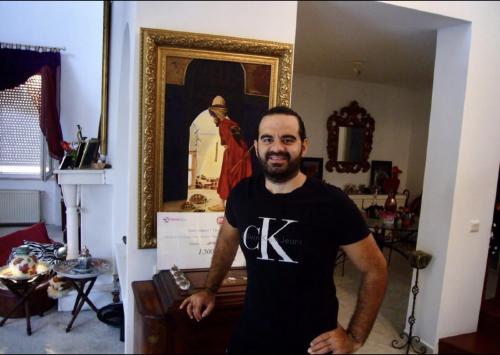
Efe Teksoy (b. 1988, Istanbul) is a film critic and media writer whose work analyzes cinema in a political and cultural context. His work approaches cinema and media through political analysis and media sociology. For over a decade, his writing has been published on both sides of the Atlantic, including the Los Angeles–based news platform Alaturka News and Bright Lights Film Journal. He earned his BA in Cinema and TV Directing, Production, and Screenwriting from Istanbul Kültür University, Department of Communication Design, and an MA in Communication Design from the same university’s Social Sciences Institute. His master’s thesis examined the influence of Charlie Chaplin’s Tramp character on Kemal Sunal’s iconic figure Şaban in Turkish popular cinema. His articles have appeared in Posta – one of Turkey’s largest newspapers, published by the Hürriyet media group – as well as Gazeteport, Tezgah Magazine, and Kayıp Rıhtım platform. He has also worked as an editor for national television programmes, serving as an editor on Mesut Yar Sunar (Star TV) and as managing editor on Sadettin Teksoy Zaman Tüneli (Teve2).
Published Works:
https://brightlightsfilm.com/sirat-the-rave-that-walked-on-mines/
https://www.alaturkanews.com/2026/02/09/sinners-movie-review-efe-teksoy/
Efe Teksoy on Daily Philosophy:
References
Guadagnino, Luca, dir. After the Hunt. [Film].
Lippmann, Walter. Public Opinion. New York: Harcourt, Brace and Company, 1922.
McChesney, Robert W. Rich Media, Poor Democracy: Communication Politics in Dubious Times. New York: The New Press, 1999.
McLuhan, Marshall. The Gutenberg Galaxy: The Making of Typographic Man. Toronto: University of Toronto Press, 1962.
Scott, James C. Domination and the Arts of Resistance: Hidden Transcripts. New Haven: Yale University Press, 1990.
Scott, James C. Seeing Like a State: How Certain Schemes to Improve the Human Condition Have Failed. New Haven: Yale University Press, 1998.