Virtue
From Homeric excellence to the character strengths of modern psychology: the long life of a central idea
The word has a faintly musty smell. “Virtue” suggests Victorian sermons, chastity, and people who do not have much fun. It is not a word we reach for when we admire someone. We say they are kind, or brave, or have integrity – but we rarely say they are virtuous, and if we did, it would sound like a joke.
This is a historical accident, and a recent one. For most of the history of Western thought, from the fifth century BCE to the eighteenth century CE, virtue was not one moral idea among others. It was the moral idea – the central concept around which the whole of ethics was organised. The question philosophers asked was not “What should I do?” but “What kind of person should I be?”, and the answer was always given in terms of the virtues. Then, for roughly two centuries, the concept went into eclipse. Then, in the second half of the twentieth century, it came back. This entry tells that story and tries to say, at the end of it, what a virtue is.
The word
The Greek word is aretē, and its basic meaning is excellence – being outstandingly good at whatever it is you are for. The word is not specifically moral. A knife has aretē if it cuts well; a horse has aretē if it runs fast; an eye has aretē if it sees clearly. The aretē of a human being is whatever makes a human being excellent at being a human being.
The Latin translation, virtus, comes from vir, “man,” and originally meant something like manliness or valour – the qualities of a good soldier. It broadened, especially in Cicero, to cover the whole range of Greek aretē. Our word “virtue” inherits both, and older English still preserves the sense of excellence or power: a medicine has “virtues,” and something happens “by virtue of” a cause.
The point matters because the Greek concept is much wider, and much less prim, than the modern connotation. To ask about aretē is to ask what it is to be really, fully good at living. That is a question almost everyone finds interesting.
Before philosophy: Homer
In Homer, aretē belongs above all to the warrior. Achilles has it in abundance: strength, courage, skill in battle, a fierce sense of honour. It is competitive – to have aretē is to be better than others – and it is publicly displayed and publicly rewarded. But even in Homer the word is not confined to fighting. Penelope has aretē for her fidelity and cleverness, and Odysseus for his cunning and endurance as much as for his spear.
What Homer does not have is any thought that these excellences might conflict, or that the truly excellent person might have to give up glory for the sake of justice. That thought arrives with the philosophers.
Who was Socrates, why did Athens put him to death, and how did a man who claimed to know nothing become the founding figure of Western philosophy?
Socrates: virtue is knowledge
Socrates (469–399 BCE) spent his life asking people what the virtues were – what is courage, what is piety, what is justice – and showing that they could not say. Behind the questioning lay a set of claims that shaped everything that came after.
First, virtue is a condition of the soul, not a matter of reputation or success. The Athenians should care less for money and honour, Socrates says at his trial, and more for “the best possible state of your soul.” Second, virtue is knowledge. To be courageous is to know what is and is not truly worth fearing; to be just is to know what is truly good. It follows that “no one does wrong willingly”: people act badly because they are mistaken about what is good, not because they knowingly choose evil. Third, the virtues are one. If each virtue is a kind of knowledge of the good, then anyone who really has one has them all.
Every one of these claims is contestable, and Plato and Aristotle both contested parts of them. But the central move – that virtue is an inner state of the person, connected to understanding, and that having it is what makes a life go well – became the foundation of Greek ethics.
Who was Plato, what did he write, and why does a thinker who died almost 2,400 years ago still shape how we think about knowledge, justice, love and the good life?
Plato: the harmony of the soul
Plato (c. 428–348 BCE) kept the Socratic framework and gave it structure. In the Republic he identifies four principal virtues – wisdom, courage, moderation (sōphrosynē, often translated “temperance”) and justice – and maps them onto a theory of the soul.
The soul, Plato argues, has three parts: reason, which seeks truth; spirit, which seeks honour and gets angry; and appetite, which seeks food, drink, sex and money. Wisdom is the virtue of reason, courage the virtue of spirit, moderation the agreement of all three parts that reason should rule. Justice – the virtue the whole book is looking for – turns out to be the condition in which each part does its own job and none usurps the others. A just soul is a harmonious soul, and an unjust one is at war with itself.
This gives Plato an answer to the oldest challenge to morality: why be good if you could get away with being bad? Because injustice is a kind of psychological disorder, like sickness, and no one benefits from being sick however much money they make. Virtue is the health of the soul.
The four Platonic virtues became canonical. Ambrose of Milan in the fourth century CE called them the cardinal virtues – the hinges (cardines) on which the moral life turns – and they are still with us.
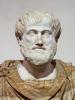
Who was Aristotle, what did he write, and why does a thinker from the fourth century BCE still shape how we think about logic, nature, happiness and the good life?
Aristotle: virtue as a settled disposition
Aristotle (384–322 BCE) wrote the most detailed and influential account of virtue ever produced, in the Nicomachean Ethics. Almost every later theory is either a development of it or a reaction against it.
The starting point is the question of what a good human life is. Aristotle’s answer is eudaimonia – flourishing, living well, being the kind of human being one could reasonably want to be. Just as the excellence of a flute-player lies in playing well, the excellence of a human being lies in living well, and living well means exercising our distinctively human capacities – above all reason – excellently. The virtues are the states of character that make this possible.
What a virtue is. A virtue, for Aristotle, is a hexis: a stable, settled disposition of character. It is not a feeling (you can feel fear without being cowardly), not a capacity (everyone can be brave), and not a single action (one honest act does not make an honest person). It is a fixed tendency to feel, choose and act in certain ways, reliably, across situations, and to do so for the right reasons and with the right emotions. The generous person does not grit her teeth and hand over the money; she gives gladly, because she sees that giving is what the situation calls for.
How you get one. Not by being born with it, and not by reading a book. Virtues are acquired by habituation – by doing virtuous acts, repeatedly, until they become second nature. “We become builders by building and lyre-players by playing the lyre; so too we become just by doing just acts, temperate by doing temperate acts, brave by doing brave acts.” This is why upbringing matters so much for Aristotle, and why he thinks ethics is more like learning a craft than learning a science. You do not first understand and then act; you act, under guidance, and understanding grows out of the practice.
The mean. Each virtue of character lies between two vices, one of excess and one of deficiency. Courage is the mean between cowardice and rashness; generosity between stinginess and prodigality; good temper between irascibility and spinelessness. But the mean is not a mathematical midpoint and not the same for everyone – what counts as eating moderately is different for a wrestler and a clerk. It is what is appropriate: feeling and acting “at the right times, about the right things, towards the right people, for the right end and in the right way.” Finding it requires judgement, and Aristotle explicitly denies that there is a rule for it. Nor does every action admit of a mean. There is no right amount of adultery.
Practical wisdom. The judgement that finds the mean is itself a virtue – phronēsis, practical wisdom, the ability to see what a situation requires and how to bring it about. It is an intellectual virtue rather than a virtue of character, but it is what makes the virtues of character possible in their full form. Without it, courage is mere boldness and generosity mere open-handedness. With it, the virtuous person is able to do the right thing in situations no rulebook could have foreseen.
Two things virtue is not. Aristotle distinguishes the virtuous person from the merely continent one, who has bad desires but overcomes them by willpower. The continent person does the right thing; the virtuous person does it and wants to. Virtue includes the emotions, not just the actions. He also distinguishes virtue from skill. A skilled doctor who deliberately kills a patient is still a skilled doctor; a just person who deliberately commits an injustice is no longer just. Virtue, unlike skill, cannot be knowingly misused.

Stoics and Epicureans
The two great Hellenistic schools took Socrates' inheritance in opposite directions.
The Stoics made virtue the only thing that is truly good. Health, wealth, reputation, even life itself are “indifferents” – preferable or not, but not good, because they can be used badly. Only virtue is good in every circumstance, and virtue is sufficient for happiness: the sage on the rack is as happy as the sage on a throne. This sounds inhuman, and Aristotle would have thought it so, but it made the Stoics the great philosophers of resilience, and their view that character is the one thing entirely in our power has never lost its appeal.
The Epicureans went the other way. Pleasure is the good, and the virtues are valuable because – and only because – they produce a pleasant life. Justice keeps you out of trouble, moderation protects you from hangovers, courage frees you from fear. “We choose the virtues for the sake of pleasure,” Epicurus said, “not for their own sake, just as we choose medicine for the sake of health.” This is the first clear statement of an idea that would return in the eighteenth century: that virtues are instrumentally good, not good in themselves.
Christianity: love, grace and the seven virtues
Christianity inherited the Greek vocabulary and transformed it. Three shifts stand out.
First, the source of virtue changed. For Aristotle, virtue is a human achievement, built by practice. For Augustine (354–430), the highest virtues are gifts of divine grace, and the pagan virtues – brave, temperate, just, but without love of God – were at best incomplete and at worst, in a phrase later attributed to him, “splendid vices.” Virtue, Augustine wrote, is rightly ordered love: loving the right things in the right degree, God above all.
Second, the list changed. Paul’s triad of faith, hope and love (1 Corinthians 13) was added to the four cardinal virtues to make seven – the number that appears in countless medieval paintings and cathedral façades, matched against the seven deadly sins. And virtues Aristotle would not have recognised, or would have despised, moved to the centre: humility, which for the Greeks was close to servility; charity towards the weak; forgiveness of enemies.
Third, Thomas Aquinas (1225–1274) put it all back together. Working from the newly recovered Nicomachean Ethics, he took over Aristotle’s account of virtue as a settled disposition acquired by habituation, and added a second tier: the theological virtues, which cannot be acquired by effort but are infused by God. The acquired virtues make us good citizens of the earthly city; the infused ones make us fit for the heavenly one. Aquinas' synthesis was so thorough that for the next several centuries “virtue” in Europe meant, more or less, what Aquinas said it meant.

Raphael, Theological Virtues.
A parallel tradition: Confucian virtue
It is worth pausing to note that the Greeks were not alone. At roughly the same time as Socrates, Confucius (551–479 BCE) was building an ethics of character in China around the concept of de – usually translated “virtue,” and carrying, like aretē, a sense of excellence and moral power. The Confucian virtues – ren (humaneness or benevolence), yi (righteousness), li (ritual propriety), zhi (wisdom), xin (trustworthiness) – were cultivated by practice, ritual and the study of exemplars, and their possessor was the junzi, the exemplary person. Mencius later argued that the virtues grow from innate “sprouts” that need nurturing, an idea with clear echoes of Aristotle’s habituation. Comparative philosophers now study the two traditions side by side, and the parallels suggest that the idea of virtue is not a Greek peculiarity but something close to a human universal.
Virtue ethics asks not what you should do but what kind of person you should be. This guide explains the modern revival – Anscombe, Foot, Hursthouse, MacIntyre – its main varieties, its advantages over Kantian and utilitarian ethics, and the strongest objections to it.
The modern eclipse
Between the sixteenth and nineteenth centuries the concept of virtue slowly lost its place at the centre of ethics. It did not vanish – everyone kept using the word – but the questions changed, and virtue became an answer to a question nobody was asking.
Machiavelli (1469–1527) had already signalled trouble by using virtù to mean the ruthless political skill of a successful prince, with no moral content at all. But the decisive shift came with the Enlightenment. Hobbes made the virtues into whatever dispositions keep the peace. Hume (1711–1776) defined virtue as “every quality of the mind which is useful or agreeable to the person himself or to others” – a definition that admits wit and cleanliness and excludes what he called the “monkish virtues” of celibacy, fasting and self-denial, which he classed as vices. Virtue is here explained by its consequences and by the pleasure it gives observers, not by any account of human flourishing.
Kant (1724–1804) kept the word but changed its meaning. Virtue, for Kant, is “the moral strength of a human being’s will in fulfilling his duty” – the fortitude to do what the moral law requires against the pull of inclination. This is closer to what Aristotle called continence than to what he called virtue: the point is not to want the right thing but to do it whether you want to or not. And Kant’s real interest was in the law, in what duty requires; virtue was the psychological capacity to comply. Utilitarians like Mill followed Hume in treating virtue as valuable because it tends to produce happiness, and admitted it into their theory as a kind of useful habit.
The effect of all this was to make “What should I do?” the central question of ethics and to answer it with a principle – the categorical imperative, the greatest happiness – rather than with a picture of a good person. Character became derivative. A virtue was simply a disposition to follow the correct principle. By the early twentieth century, moral philosophy in English was almost entirely a debate between Kantians and utilitarians about the principle, and virtue was hardly mentioned.
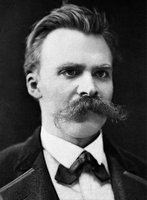
Nietzsche stands apart. He despised the Christian virtues as the “slave morality” of the weak, but he did not abandon virtue itself. He wanted new ones, self-created, “too exalted for the familiarity of names.” In his way he was more Aristotelian than the Kantians: what mattered was the kind of person you became.
The revival
The turn came in 1958, when Elizabeth Anscombe published a short, ferocious paper called “Modern Moral Philosophy.” The moral “ought,” she argued, was a survival from a divine-law conception of ethics that most philosophers no longer held; without a lawgiver it had no content. Rather than argue about what we “morally ought” to do, we should go back to Aristotle and ask what a just or courageous or honest person is like – and before that, we needed a proper philosophy of psychology, of action, intention and character.
Philippa Foot took up the challenge. In “Virtues and Vices” (1978) she argued that the virtues are corrective: each one stands at a point where human nature tends to go wrong. Courage exists because we are inclined to fear; temperance because we are inclined to overindulge. In Natural Goodness (2001) she went further, arguing that “good” as applied to a human being works like “good” as applied to any living thing – a good wolf, a good oak – and that the virtues are what a human being needs in order to live the kind of life a human being lives. Alasdair MacIntyre’s After Virtue (1981) told the historical story from the other side: the Enlightenment had tried to justify morality without any account of human purpose, had failed, and had left us with fragments of a vocabulary we no longer understood. Only a return to the tradition of the virtues, embedded in shared practices and communities, could make sense of moral life again.
By the 1990s this current had a name – virtue ethics – and a standard-bearer in Rosalind Hursthouse, whose On Virtue Ethics (1999) set out the view systematically and defended it against the charge that it could not tell anyone what to do. Julia Annas, Martha Nussbaum, Michael Slote and Christine Swanton developed it in different directions. Virtue ethics is now generally treated as the third major approach to normative ethics, alongside the Kantian and utilitarian theories that had displaced it. We will discuss it in detail in a separate entry; here it is enough to say that the revival restored virtue to the centre of philosophical attention after two hundred years at the edge.
The concept has also travelled beyond ethics. Virtue epistemology, developed by Ernest Sosa and Linda Zagzebski among others, analyses knowledge in terms of intellectual virtues – open-mindedness, intellectual courage, thoroughness, humility – reviving a distinction Aristotle drew in Book VI of the Ethics. And in psychology, Christopher Peterson and Martin Seligman’s Character Strengths and Virtues (2004) attempted an empirical classification of twenty-four “character strengths” under six broad virtues, drawing explicitly on the philosophical and religious traditions. Whatever one thinks of the details, it is striking that when psychology wanted a vocabulary for what makes people admirable, it reached for Aristotle’s.
So what is a virtue?
Pulling the threads together, the tradition converges on something like the following.
A virtue is a stable disposition of character – a trait, not a mood or a single act – that makes its possessor good as a human being and tends to make their life go well. It is acquired, mostly through practice and example rather than instruction. It involves not just action but perception, emotion and motivation: the virtuous person notices what matters, feels appropriately about it, wants to do the right thing, and does it. It is reliable across situations, though not infallible. It is typically concerned with some sphere of human life where things tend to go wrong – danger (courage), bodily pleasure (temperance), other people’s claims (justice), the truth (honesty). And it is not a skill, because it cannot be knowingly used for bad ends without ceasing to be a virtue.
On every one of these points there is a live debate. Whether virtues are really stable across situations was challenged in the 1990s by philosophers drawing on social psychology, who pointed to experiments in which small situational changes – being in a hurry, finding a coin in a phone booth – made large differences to whether people helped a stranger. If behaviour depends on circumstances that much, perhaps “character” is an illusion. Defenders reply that full virtue was always meant to be rare, and that the experiments show most people lack it, not that the concept is empty. The argument continues.
Why it matters
The philosophy of virtue is not a museum piece. It bears on questions everyone faces.
Rules or character? Most modern ethical discussion – in professional codes, in public debate, in school – is about rules: what is permitted, what is forbidden. The virtue tradition says this misses the main thing. Rules cannot anticipate every situation, and a person who only follows rules will be lost when the rules run out. What we need is judgement – Aristotle’s practical wisdom – and judgement is a trait of character, not a clause in a code. A good doctor, teacher or manager is not someone who has memorised the guidelines but someone who sees what a situation needs.
Habit. Aristotle’s insistence that virtue is built by practice, not acquired by insight, is one of the most practically useful ideas in the history of philosophy. It means that becoming a better person is a matter of training, like getting fit: small acts, repeated, until they become who you are. It also means that the things you habitually do are shaping you whether you intend it or not.
Emotion. The tradition denies that being good is a matter of suppressing feelings in favour of duty. The virtuous person feels rightly – is angered by injustice, moved by suffering, glad to be generous. That is a very different picture of moral maturity from the one that says feelings are irrelevant, and a more attractive one. It also implies that emotional education is moral education.
Role models. If virtue is learned by imitation and practice, then the people we admire and spend time with matter enormously. Confucius and Aristotle both thought that choosing your exemplars was one of the most important things a person could do. In an age of celebrity, that is worth pondering.
The question itself. Above all, the tradition keeps alive a question that modern life rarely asks directly: not “What do I want?” or “What am I allowed?” but “What kind of person am I becoming?” That question, once you start asking it, changes how everything else looks.
◊ ◊ ◊
Where to start reading
- Aristotle, Nicomachean Ethics, translated by Roger Crisp (Cambridge, rev. ed. 2014) or Terence Irwin (Hackett, 3rd ed. 2019) – the essential text. Books I, II and VI are the core; Book II alone repays many readings.
- Plato, Republic, translated by G. M. A. Grube and C. D. C. Reeve (Hackett, 1992) – Book IV contains the account of the four virtues and the parts of the soul. The short dialogue Meno is a good companion on whether virtue can be taught.
- Julia Annas, Intelligent Virtue (Oxford, 2011) – a clear, modern account of what virtue is, developing the analogy with skill. The best single contemporary book on the concept.
- Philippa Foot, Virtues and Vices (Oxford, 1978; reissued 2002) – the title essay is one of the founding documents of the revival, and beautifully written.
- Alasdair MacIntyre, After Virtue (Notre Dame, 3rd ed. 2007) – the historical argument for why virtue was lost and why it matters; polemical and hugely influential.
- Rosalind Hursthouse, On Virtue Ethics (Oxford, 1999) – the standard systematic statement of the revived theory.
- André Comte-Sponville, A Small Treatise on the Great Virtues (Metropolitan, 2001) – eighteen short, elegant essays on individual virtues from politeness to love, written for a general reader.
- Daniel C. Russell (ed.), The Cambridge Companion to Virtue Ethics (Cambridge, 2013) – essays covering the history and the contemporary debates, including the Confucian tradition and the situationist challenge.
Read more
- Virtue Ethics – Stanford Encyclopedia of Philosophy. Rosalind Hursthouse and Glen Pettigrove on the revived theory, with a good preliminary account of what a virtue is.
- Aristotle’s Ethics – Stanford Encyclopedia of Philosophy. Richard Kraut’s detailed guide to the Nicomachean Ethics.
- Plato’s Ethics: An Overview – Stanford Encyclopedia of Philosophy. The Socratic background and the Republic account.
- Ancient Ethical Theory – Stanford Encyclopedia of Philosophy. How virtue functioned across the Greek schools, including the Stoics and Epicureans.
- Moral Character – Stanford Encyclopedia of Philosophy. The concept of character and the situationist challenge to it.
- Aquinas' Moral, Political, and Legal Philosophy – Stanford Encyclopedia of Philosophy. The medieval synthesis of Aristotle and Christianity.
- Confucius – Stanford Encyclopedia of Philosophy. The parallel tradition of virtue in early China.
- Hume’s Moral Philosophy – Stanford Encyclopedia of Philosophy. Virtue as what is useful or agreeable.
- Kant’s Moral Philosophy – Stanford Encyclopedia of Philosophy. Virtue as strength of will, and why Kant put duty first.
- Virtue Epistemology – Stanford Encyclopedia of Philosophy. The intellectual virtues and their role in knowledge.
- Virtue Ethics – Internet Encyclopedia of Philosophy. A more approachable overview of the history and the contemporary revival.
- Aristotle: Ethics – Internet Encyclopedia of Philosophy. A readable introduction to the Nicomachean Ethics for beginners.