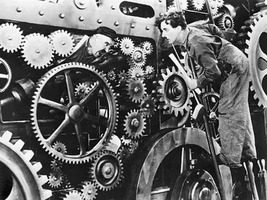
What Role Should Work Play in a Good Life?
Suppose you suddenly inherited enough money to live comfortably for the rest of your life. Would you continue to work? For many people, the honest answer is no. This answer reveals something important and troubling about the role work plays in our lives. We devote a large share of our most energetic years to work and yet often value it only as a way to pay the bills. This situation deserves further reflection. At major life junctures, where we have the chance to reorganize our lives, we might find ourselves stopping to ask: what role should work play in a good life? Answering this question requires distinguishing the different ways work can matter to us, and the trade-offs each involves.
Work as Necessary Toil
For many, work is primarily a necessity: a way to earn a living rather than a source of enjoyment, identity, or meaning. There is nothing shameful about this. Many people, especially those from disadvantaged backgrounds, have limited freedom to choose the terms on which they work. Any serious discussion of work must recognise these constraints.
Nonetheless, there is something unideal about an arrangement in which an activity that consumes so much of our lives adds value only indirectly. As Studs Terkel once observed, ‘most of us have jobs that are too small for our spirits’. For this reason, some philosophers argue that access to meaningful work is a basic good humans need to flourish, and that governments should prioritize creating conditions in which such work is available to all. Even if one rejects this strong claim, it is hard to deny that, all else being equal, it would be better to find work that adds direct value to our lives rather than serving solely as a way to pay the bills.

Working for Status
A different relationship to work is grounded in status. Some people derive meaning from their work because it confers prestige and recognition. They work not merely to survive, but to be respected and admired. This is, in one sense, an advance on work as toil. Work does not merely provide income, it becomes a source of identity and self-worth. However, there are serious pitfalls to building meaning around status.
First, it mislocates where the value lies. Imagine someone who obtains their professional standing by fabricating credentials or taking credit for work done by others. Their status seems hollow precisely because it doesn’t reflect any genuine achievements. But if status is meaningful only when it tracks real accomplishment, then it is the accomplishment that matters rather than the social status it brings. To focus on status is to focus on an unreliable signal of value instead of the fundamental source of that value.
Second, pursuing status is inherently comparative. If your sense of self depends on your standing relative to others, then you are locked into a zero-sum game. In such a game, you treat the success of others as a threat and their failure as something to welcome. This outlook corrodes trust and solidarity among workers, and is particularly damaging in competitive, high-pressure societies.
Work as Meaningful Activity
A more robust way to derive meaning from work is to focus on the value the work itself creates, which can either be through its direct impact on others or through the intrinsic goods realized in doing it well.
Most work, when done competently, produces goods or services that benefit others. For example, a construction worker builds safe, functional buildings, and a teacher helps educate the next generation. Even when the impact of our work is modest, contributing something of value to the world through the skilled exercise of one’s abilities can be a significant source of meaning in our lives.
Importantly, meaning derived from productive contribution need not be zero-sum. The teacher who finds fulfilment in educating students has no reason to feel threatened by her colleague successfully doing the same. This allows for professional relationships characterized by mutual affirmation rather than constant competition.
Work can also be meaningful in virtue of the intrinsic goods it realises. It can allow us to engage in self-directed activity, exercise our skills and talents, and be a source of creative expression. This is independent from any positive impact our work has. An analyst who uses their skills to develop an ingenious solution to a difficult problem may find the activity itself meaningful, even if contingencies prevent the solution from ever being implemented. The development and exercise of our talents is central to a well-lived life.
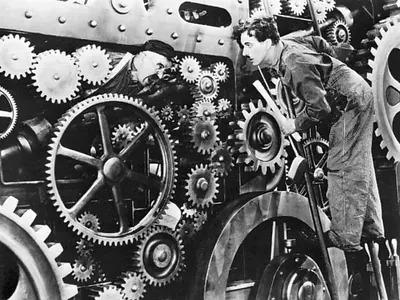
A hundred years ago, activists were building parks and libraries and community centres so that workers would put the newly found free time to good use.
How Central Should Work Be?
For those fortunate enough to find their work meaningful, a further question arises: How much of your life should work occupy? Some people lead well-rounded lives, in which work is one important source of meaning alongside things like family, friendships, community, hobbies, or religion. Others organise their lives more narrowly around work and draw most of their identity and purpose from it — an approach called ‘workism’.
Workism has attracted criticism, some of which seems justified. When pursued by those temperamentally unsuited to it, or in an unsupportive institutional environment, it can lead to burnout, dissatisfaction, and isolation. But the critics often go too far. For some people — especially those with deep vocational commitments — a work-centered life may suit them best. Those with the opportunity to make a contribution through a vocation may find that doing so requires them to develop a depth of mastery that takes years to acquire and demands a single-minded focus. Moreover, people differ in what they find fulfilling. If someone genuinely prefers spending a Saturday grappling with a challenging work problem rather than pursuing leisure activities, it is unclear why this should be dismissed as misguided. The relevant question to ask is not whether workism is good or bad in the abstract, but what structure best fits a particular person’s talents, temperament, and values.
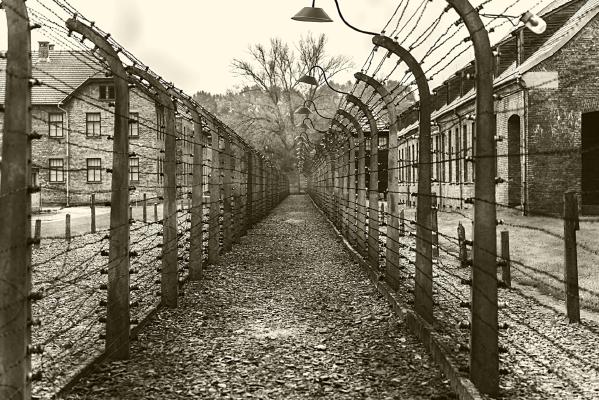
Viktor Frankl was an Austrian neurologist and psychiatrist who, because of his Jewish descent, spent the last six months of World War II in a German concentration camp, which he barely survived.
Taking Stock
Our attitudes towards work are shaped by social forces more than we tend to realise. We drift into careers for contingent reasons, absorb the prevailing attitudes of those around us, and rarely pause to ask whether the place work occupies in our lives serves us well.
But we can do better. We can ask ourselves to what extent we are motivated by income, or status, or meaning in doing the work we do. We can also examine whether we have defaulted either into workism or into a rigid work-life separation when the opposite might suit us better. There are no fixed answers to these questions, but they are still worth asking. Work takes up too much of our lives to be left unexamined.

Matthew Hammerton is Associate Professor of Philosophy, Associate Dean (Education), and Lee Kong Chian Fellow in the School of Social Sciences at Singapore Management University. His research explores different categories of value that are important for living a good life and acting ethically. He is best known for his work on agent-relative value, which examines moral theories like consequentialism and deontology. He also writes about meaning in life, examining its connection to well-being, sacrifice, luck, and work-life balance.
Website: https://faculty.smu.edu.sg/profile/hammerton-matthew-2071
Matthew Hammerton on Daily Philosophy: